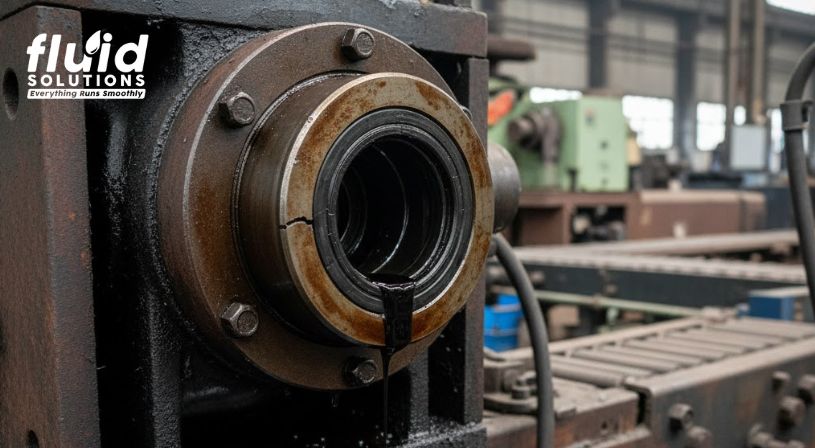
Gearbox seals are installed to retain gear oils while preventing the intrusion of contaminants. However, once seals are damaged and leakage occurs, the entire gearbox system is put at risk, leading to overheating, reduced lubrication efficiency, and accelerated component wear.
Gearbox seal failures typically result from a combination of chemical, thermal, and mechanical stresses that progressively degrade seal materials. Understanding these underlying factors is essential for implementing preventive measures and ensuring reliability of gearboxes.
Causes of Gearbox Seal Leakage
Gearbox seals retain lubricants within the housing while blocking dust, moisture, and other contaminants. These seals are vulnerable to chemical exposure, thermal stress, and mechanical wear. Over time, incompatible lubricants, excessive heat, or contaminant ingress cause seal materials to swell, harden, crack, or shrink, impairing the seal’s effectiveness and allowing gear oil to leak.
- Lubricant and Seal Incompatibility: Seals are made from materials such as Nitrile (NBR), Viton (FKM), and Polyacrylate (ACM), each with specific resistance profiles to oils and additives. Incompatible lubricants, such as those with aggressive EP additives or solvent-containing oils, can cause excessive softening, shrinkage, or loss of elasticity in seals, breaking the barrier and causing leaks. Using oils with improper viscosity or additives can further undermine seal performance by increasing internal pressures or altering seal flexibility.
- Thermal Stress: Continuous high loads generate heat that can accelerate elastomer degradation. Excessive temperatures may cause seals to harden, crack, or become brittle and promote oxidation that weakens seal surfaces. When operating temperatures exceed seal ratings, failure can occur rapidly.
- Contamination or Degradation: Water ingress, dust, oxidation byproducts, and wear particles all create abrasive or corrosive conditions inside the gearbox. These contaminants degrade both the lubricant and the seal surface, creating grooves, pitting, or soft spots that compromise sealing ability. Contaminated oil circulates corrosive particles throughout the gearbox, accelerating the breakdown of seals.
- Mechanical Wear and Misalignment: Seal damage can occur from shaft misalignment, vibration, or abrasive particles causing surface wear, lip burns, or deformation that impair the seal’s ability to maintain a tight barrier.
- Internal Pressure Imbalances: Blocked venting or overfilled lubricant levels raise internal gearbox pressure, forcing oil past the seal lips.
The Impact of Gearbox Seal Leakage
- Lubricant Depletion Within Housing: Oil loss diminishes internal lubrication volume, starving gear flanks and bearing races of protective lubricant film. This escalates metal-to-metal contact, deforming tooth profiles, inducing rolling element fatigue, and generating localized heat spikes that oxidize and carbonize residual lubricant within the gearbox.
- Contaminant Ingress to Gear Train: Breached seals admit abrasives, moisture, and particulates that score gear flanks, pit bearing races, and embed debris in mating surfaces.
- Pressure Imbalance in Cavity: Leaks disrupt internal pressure equilibrium across the housing, exacerbating seal lip deflection, shaft runout, and progressive gear misalignment under load.
How to Prevent Gearbox Seal Leakage
Proactive measures extend gearbox service life by addressing degradation early.
- Ensure Lubricant and Seal Compatibility
Select lubricants formulated with additives compatible with seal materials, to prevent seal degradation, swelling, or cracking that leads to leakage. Avoid lubricants containing additives known to attack elastomers used in seals. Regularly verifying lubricant-seal compatibility minimizes premature seal failure and leakage risk.
- Monitor Operating Temperatures
Gearbox seals must operate within their designated temperature ranges to prevent premature failure from thermal damage. Each seal material has specific temperature limits affecting its reliability under heat stress:
- Nitrile (NBR) — Suitable for standard applications up to 120-135°C continuous.
- Viton (FKM) — Superior for demanding conditions up to 200-230°C; ideal for high-speed shafts generating seal lip heat, though low-temperature flexibility limits to -15°C standard.
- Polyacrylate (ACM) — Optimized for high-heat environments up to 175-200°C.
To protect seal integrity and avoid leaks caused by overheating, it is critical to implement the following practices:
- Employ effective cooling measures, including optimized lubricant flow and heat dissipation systems.
- Regularly monitor gearbox temperature, especially under high load or continuous operation.
- Select seal materials based on anticipated operating temperatures and lubricant compatibility to ensure thermal resistance suitable for the application.
- Effective Contamination Control
To prevent contamination and degradation that cause gearbox seal failure, focus on these key preventive actions:
- Maintain effective sealing to block dust, moisture, and abrasive particles from entering the gearbox.
- Replace seals on schedule and ensure proper installation to maintain seal integrity.
- Keep lubricant clean through regular filtration and timely oil changes.
- Conduct routine oil analysis to detect water ingress, oxidation byproducts, particle contamination, and additive depletion for proactive maintenance.
- Control Mechanical Wear and Misalignment
Ensure shafts are properly aligned, minimizing vibration, and inspect seals and shafts regularly for wear or damage. Install a compatible replacement seal when any signs of wear or damage are present on the seal surface.
- Implement Proper Internal Gearbox Pressure
Avoid overfilling lubricants and ensure venting systems are functioning properly. Excessive pressure causes oil past seals and accelerates leakage. Periodically check and clean breather vents, and follow recommended oil fill levels to maintain balanced internal pressure.
Got More Questions? Contact our Experts Today
Gear box leaking oil can also be prevented by choosing the right lubricant. Fluid Solutions provides high-quality industrial gear oil engineered for excellent seal compatibility, thermal stability, and long-lasting protection.
We offer oil analysis and compatibility testing to support your predictive maintenance, detecting seal degradation early to extend gearbox life and cut costs. Contact our lubrication experts today.
Explore our full product lineup here: https://fluidsolutions.com.ph/products/
For consultation or product availability, contact us at (02) 8370 5928, 0917 894 9156, or [email protected].
Stay updated on our latest products and technical insights:
Facebook: https://www.facebook.com/fluidsolutionsinc
LinkedIn: https://www.linkedin.com/company/fluid-solutions-inc