Shear stability is a lubricant’s ability to resist loss of viscosity when subjected to mechanical stress. In industrial applications, such stress arises from pumping action, gear meshing, and rolling or sliding contact during operation. Albeit these oils and greases serve the same primary function, the mechanisms by which shear forces affect them differ significantly. Understanding these differences is essential for making an informed selection of lubricants suited to their operating conditions.
Shear Stability in Oils
In oils, shear stability refers to the ability of the lubricant to retain its viscosity when subjected to mechanical shear during service. As oils pass through components such as hydraulic pumps and gear meshes, they are exposed to high shear forces that can permanently reduce viscosity. Oils with good shear stability resist this viscosity loss, maintaining their intended viscosity and film under repeated mechanical stress.
Shear Stability in Greases
In greases, shear stability does not describe viscosity retention, but the ability of the grease to withstand mechanical working without losing its physical, tacky form. Unlike oils, greases are semi-solid lubricants designed to stay in place. During operation, rolling and sliding motion mechanically work the grease. A shear-stable grease maintains its consistency under this repeated working, rather than softening or separating oil.
Shear Stability Testing Methods in Oils

ASTM D6278 or the “Sonic Shear Test”
This method subjects oil samples to prolonged ultrasonic shear to simulate extreme mechanical stress over time. The test measures the resulting change in viscosity, providing a benchmark for how well the oil can retain its protective film under continuous high-shear conditions. Oils that show minimal viscosity loss are considered highly shear-stable and suitable for high-performance applications such as hydraulic systems and heavy-duty gear drives.
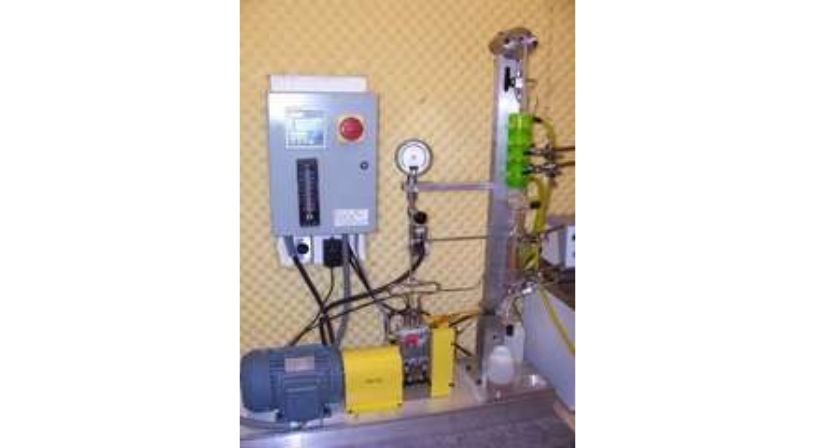
Source: https://www.savantlab.com/testing-highlights/testing-shear-stability-and-viscosity-loss/
ASTM D7109 or the “Kurt Orbahn Test”
The Kurt Orbahn test evaluates oil viscosity after repeated high-shear cycles that replicate the stresses found in gears, transmissions, and hydraulic components. By closely simulating actual operating conditions, this test provides insight into the oil’s durability and its ability to maintain effective lubrication in mechanically demanding systems.
Shear Stability Testing Methods in Greases
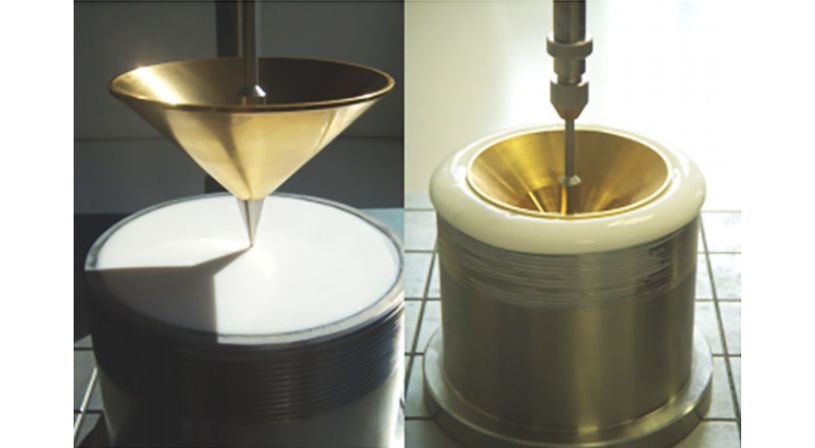
ASTM D217 or the “Worked Penetration Test”
This test measures the change in grease consistency after mechanical working, typically performed by repeated strokes or kneading of a cone. It evaluates the grease’s ability to maintain its NLGI grade during service. A shear-stable grease exhibits minimal softening, ensuring consistent lubrication under repeated mechanical stress.

ASTM D1831 or the “Roll Stability Test”
The roll stability test simulates rolling contact by exposing the grease to steel rollers under load. It evaluates the grease’s resistance to mechanical degradation, including fiber breakdown or oil separation, under conditions that mimic bearing or roller operation. Results indicate long-term structural stability and suitability for high-speed or vibration-prone applications.
Where Shear Stability Is Vital?
Lubricants’ and greases’ shear stability proves indispensable in applications including:
- Operations with extreme pressure spikes
- Operations with continuous high Hertzian contact
- Operations with heavy shock and vibration
- Operations requiring high-speed endurance
- Operations involving high-temperature shearing
- Operations with frequent start-stop cycles
- Operations under extreme water contamination
In Need of a Shear-Stable Lubricant or Grease?
Our team of lubrication consultants can help you find the right lubricant or grease for your operations. Contact us today for expert guidance on shear-stable grease selection: (02) 8370 5928 | (0917) 894 9156 or email [email protected].
Follow us for updates:
Facebook: https://www.facebook.com/fluidsolutionsinc
LinkedIn: https://www.linkedin.com/company/fluid-solutions-inc