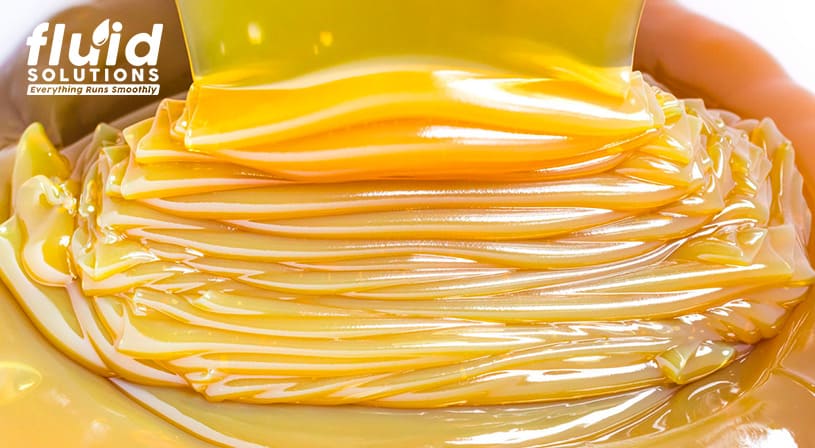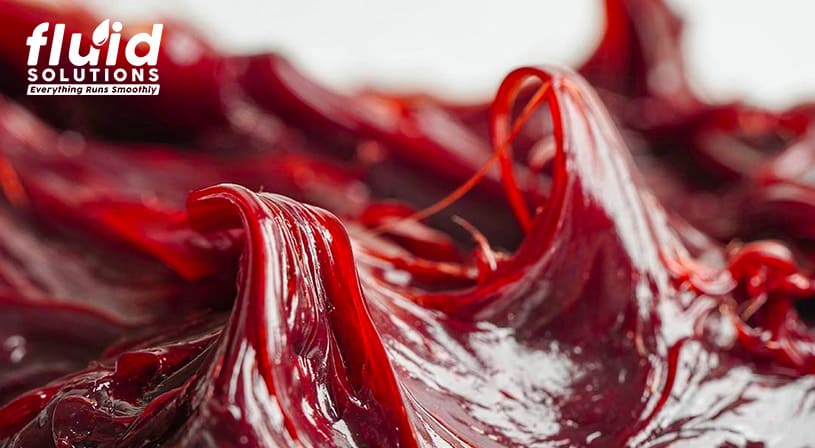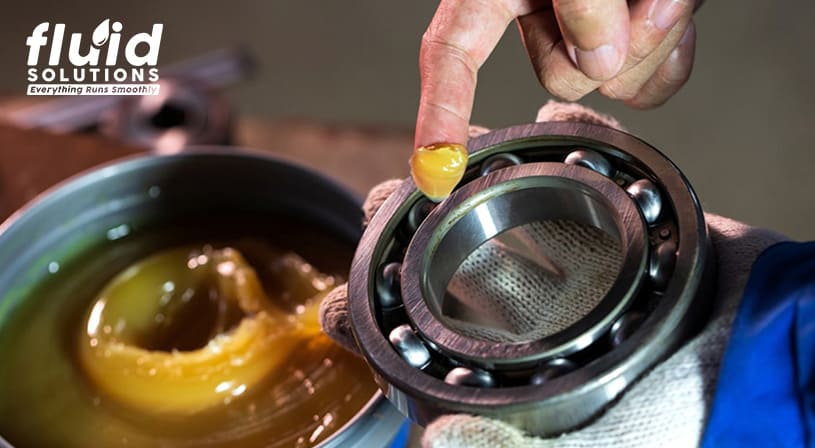
Greases play a crucial role in the world of lubrication, providing essential functions in various industrial applications. This article aims to provide a comprehensive overview of greases, defining their purpose, exploring their primary functions, highlighting advantages over oils, discussing limitations, examining applications, and emphasizing the importance of consulting with lubrication experts.
Grease Anatomy
Grease is a semisolid lubricant composed of base oil combined with a thickener.
Grease contains three properties:
Base Oil: Constitutes 80%-95% of grease composition. Mineral oil is the predominant choice for its optimal performance in standard industrial applications. Synthetic base oils are preferred in extreme temperatures, either high or low.
Thickener: Makes up 5%-20% of grease and gives it a semi-fluid to solid consistency. Metallic soaps such as lithium, clay, sodium, aluminum, polyurea, and calcium are commonly used. Complex greases combine metallic and lithium soaps with low-molecular-weight organic acids, known for their high dropping points and efficient load-carrying capabilities. Non-soap thickeners like bentonite and silica aerogel are gaining popularity for their ability to withstand high temperatures and applicability in the food manufacturing process. However, compatibility issues with base oils can lead to faster oxidation and cause more frequent regression.
Additives: Constitute 0%-10% of grease and play a crucial role in enhancing desirable properties, mitigating undesirable ones, and introducing new functionalities. Examples include molybdenum disulfide and graphite, which reduce friction and wear without causing rust on metal surfaces, particularly under slow speeds and heavy loads.
Primary Functions of Greases
Reduce Friction: Lubrication reduces friction by forming a thin film between moving surfaces, minimizing direct contact and preventing metal-on-metal rubbing.
Minimize Wear: Greases form a protective film between moving surfaces, reducing wear and friction, extending the lifespan of bearings.
Seal Against Contaminants: Grease is a sealant that minimizes leakage and keeps out contaminants, offering a sealed system for machines and equipment.
Prevent Rust and Corrosion: Lubricating greases provide high corrosion protection by insulating machinery with a layer that prevents water ingress and subsequent corrosion.
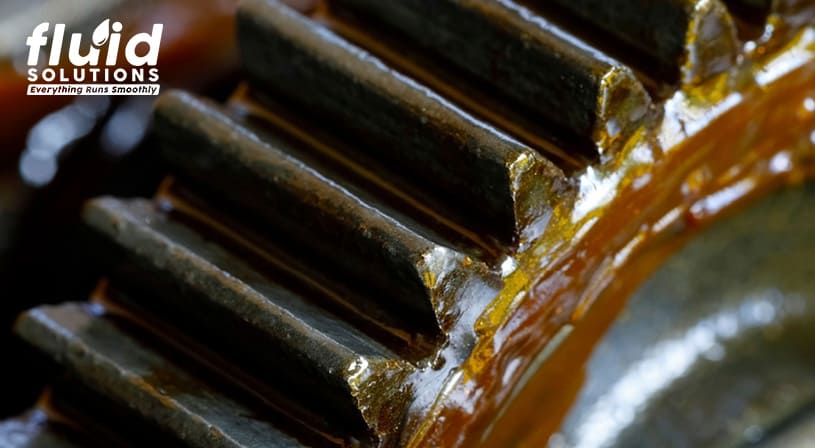
Advantages of Grease over Oil
Oil and grease prevent metal-on-metal contact and protect equipment from wear, but the two are not interchangeable. Here are some advantages of using grease over oil:
Adherence to Surfaces: Greases adhere well, especially in vertical or overhead applications, ensuring continuous lubrication.
Longer Lubrication Intervals: The grease’s semisolid nature allows for longer relubrication intervals. Greases are effective in mechanical components for longer periods.
Sealing Function: Greases excel in providing superior seals against contaminants.
Limitations of Grease
Reduced Heat Absorption: Grease cannot dissipate heat through convection like circulating oil because of its consistency. At higher temperatures, grease separates more quickly, causing the thickening agent to separate from the base oil that acts as a lubricant.
Resistance to Flow: Grease’s semisolid nature limits its flowability compared to oils, impacting specific lubrication scenarios. It has a higher resistance to motion at start-up than oil, making it unsuitable for low torque/high-speed operations. Because of their pasty consistency, greases are unsuitable for high-speed applications, unlike liquids.
Storage Stability: Extended storage can separate the base oil and thickener, altering the grease’s properties.
Limited Reach: Greases may not effectively reach all areas requiring lubrication, especially in complex or hard-to-access machinery.
Consult with Lubrication Consultants
Get the correct grease lubricant solutions for your business with Fluid Solutions. Since 2008, we’ve been delivering superior lubrication solutions to manufacturing industries, steel production, sugar mills, coconut oil mills, and the food and beverage sectors in the Philippines.
Fluid Solutions delivers unmatched quality and expertise, whether you need high-temperature greases, gear coupling greases, or multi-purpose greases for all industrial applications.
Call Fluid Solutions at (02) 8370 5928 / (0917) 894 9156 or send us an email at [email protected] for your inquiries or if you want to get tailored guidance for your business. You can also reach us via our official website or social media pages for any lubrication concerns.