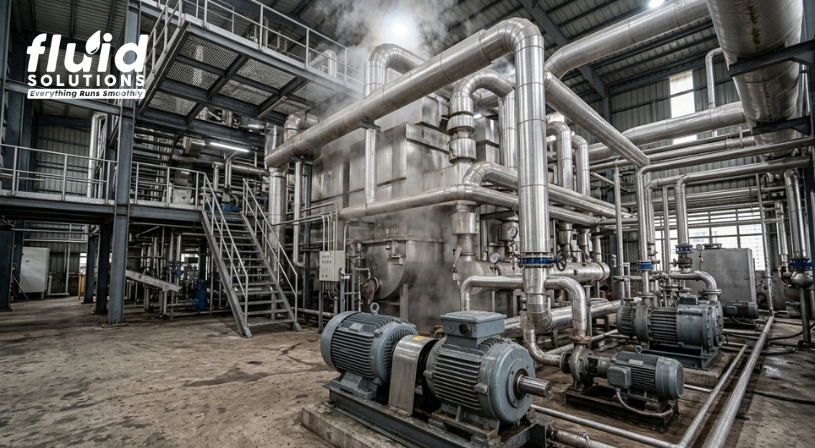
Multiple-effect evaporators concentrate clarified juice into syrup under a sequence of falling pressures and rising temperatures, and the pumps that keep this stage running depend on the appropriate lubricant to endure these demanding conditions. Effective evaporator pump maintenance therefore requires close attention to operating temperature, moisture exposure, and lubricant condition. This article covers the three pump systems that define evaporator reliability and the grease properties each one requires.
Key Takeaways
- Multiple-effect evaporators rely on three main pump systems: juice/syrup transfer, condensate extraction, and vacuum pumps.
- Transfer pump bearings need grease with thermal stability, corrosion protection, and water resistance.
- Condensate pump bearings require high-temperature, water-resistant grease to withstand continuous moisture exposure.
- Vacuum pumps need lubricants with water resistance, thermal stability, and oxidation resistance, depending on pump design.
- Lubricants should be selected based on each pump’s heat, moisture, and contamination exposure, with compatibility checked before switching greases.
How Multiple-Effect Evaporators Work
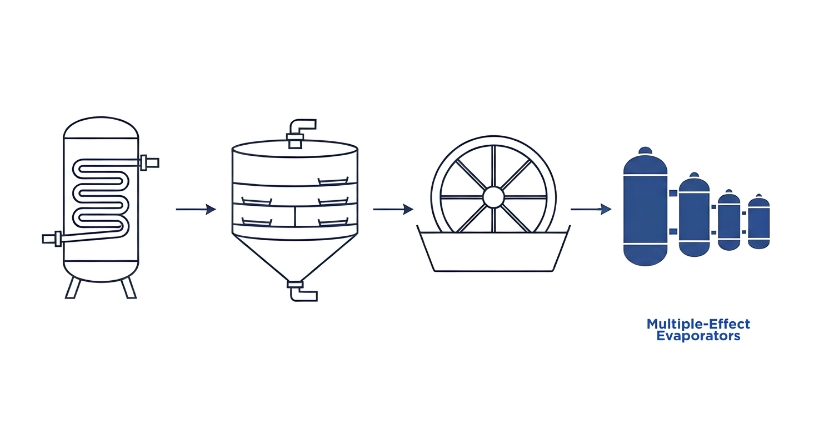
Steam heats juice in the first effect, and the vapor it generates is piped to heat juice in the second effect, which operates under partial vacuum at a correspondingly lower boiling point. This cascading arrangement repeats across each successive effect, extracting additional water at progressively lower pressure until the final effect produces syrup at the target Brix.
Vacuum in the later effects is essential to the whole arrangement since it lowers the juice’s boiling point enough for the reduced-temperature vapor from the previous effect to still do useful heating work. Non-condensable gases must be continuously removed to keep that vacuum stable, which is where the vacuum pump earns its place as a critical, continuously running asset rather than a support system. As part of industrial equipment maintenance, monitoring these continuously operating pumps and their lubrication condition can help identify issues before they disrupt the evaporation process.
Key Lubrication Points
Three pump systems carry the operational load in this phase, and each presents a different combination of heat, moisture, and contamination risk. The table below summarizes what to look for in each case.
| Pump System | Role | Challenging Conditions | Lubricant Type | Recommended Properties |
| Juice/Syrup Transfer Pumps | Moves juice between effects and syrup out of the final effect | Continuous operation, hot and increasingly viscous syrup, corrosion exposure | Grease | • Thermal Stability • Rust & Corrosion protection • Water Resistance |
| Condensate Extraction Pumps | Removes condensate from each effect’s shell side | Continuous operation, high temperature, condensate and moisture exposure | Grease | • High-Temperature Stability • Water Resistance • Rust & Corrosion Protection |
| Vacuum Pumps | Maintains vacuum and removes non-condensable gases | Continuous operation, moisture and vapor carryover, heat buildup | Oil or grease, depending on pump design | • Rust & Corrosion Protection • Water Resistance • Thermal Stability • Oxidation Resistance |
For condensate extraction pumps in particular, a high temperature grease should be selected based on the bearing’s operating temperature, moisture exposure, load, speed, and manufacturer requirements rather than temperature resistance alone.
Next in the Series: Crystallization & Finishing
With Phase 2 of this series now complete, the concentrated syrup produced here moves on to crystallization and finishing, where vacuum pans, crystallizers, centrifugals, and sugar dryers introduce a new set of lubrication challenges. The next article, Lubrication for Sugar Mills, Phase 3: An Overview of Crystallization & Finishing Machines, introduces the key equipment used in this stage and the lubrication requirements needed to support reliable operation.
For guidance on selecting the right synthetic lubricants or greases for your evaporator train, reach out to Fluid Solutions, Inc.
Get in Touch
- Telephone: (+63) 2 8370 5928
- Mobile: (+63) 917 894 9156
- Email: [email protected]
Stay updated on our latest products and technical insights:
- Facebook: https://www.facebook.com/fluidsolutionsinc
- LinkedIn: https://www.linkedin.com/company/fluid-solutions-inc
For additional guidance, below are answers to some common questions about lubrication for multiple-effect evaporators.
Frequently Asked Questions
Why is water ingress the primary failure driver for condensate extraction pumps rather than mechanical load? These pumps deal with continuous exposure to hot condensate and steam vapor. Once moisture reaches the seal, grease can emulsify and lose its film strength well before mechanical wear becomes the limiting factor, which is why adhesion and washout resistance take priority in lubricant selection here.
Why does oxidation resistance matter more for grease-lubricated vacuum pumps than for sealed oil systems? Heat buildup combined with air ingress accelerates grease breakdown faster than it would in a sealed, oil-lubricated system. Synthetic lubricants with antioxidant additive packages extend service life under these fluctuating vacuum and temperature conditions.
What should a plant check before switching condensate pump greases? Confirm compatibility with the grease already in service to avoid thickener incompatibility at the bearing, since mixing incompatible thickener types can cause the grease to break down rather than perform as intended.