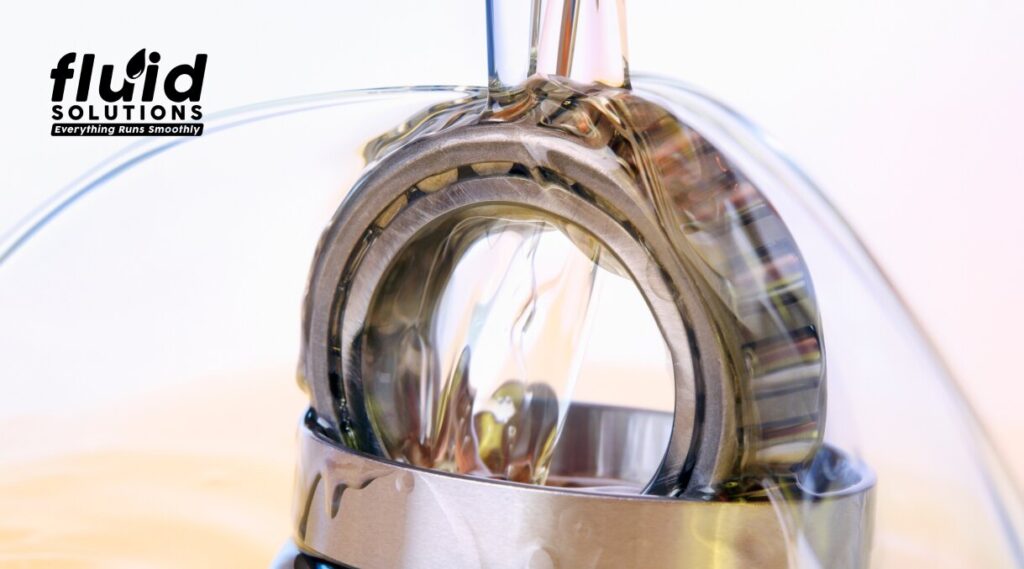
Bearing oil selection is a critical factor in how effectively a bearing performs its intended function of supporting loads while allowing controlled rotational or linear motion with minimal friction. During operation, bearings are subjected to varying loads, speeds, and operating temperatures that directly influence lubricant performance. Bearing oil selection must be aligned with the component’s operating requirements.
Common Consequences of Improper Bearing Oil Selection
An unsuitable bearing oil may result in the following:
- Accelerated Bearing Wear: Inadequate lubrication increases friction between bearing components, resulting in faster wear and reduced service life.
- Excessive Operating Temperatures: Incorrect oil viscosity can increase friction or internal fluid resistance, causing bearings to operate at higher temperatures.
- Increased Rotational Resistance: Excessively viscous oils create greater internal drag, making bearings harder to rotate.
- Lubricant Oxidation and Deposit Formation: Excessive heat and unsuitable lubricant properties can accelerate oil degradation, leading to sludge and varnish.
- Corrosion and Contamination Issues: Bearing oils that provide insufficient protection against moisture, oxidation, or contaminants may increase the risk of corrosion and shortened lubricant life.
Key Considerations in Bearing Oil Selection
| Factor | Selection Criteria |
| Speed | High-speed bearings (typically >3,000 RPM) generally require lower-viscosity oils (e.g., ISO VG 22–68) to reduce fluid resistance and heat generation. Lower-speed applications (typically <1,000 RPM) may benefit from higher-viscosity oils (e.g., ISO VG 100–220) to maintain an adequate lubricating film. |
| Load | Bearings operating under heavy loads require oils with sufficient viscosity and load-carrying capability. Extreme Pressure (EP) additives may also be necessary for severe operating conditions. |
| Operating Temperature | Select an oil that maintains suitable viscosity throughout the expected operating temperature range. Mineral oils are generally suitable for temperatures up to 80°C. Below 0°C, use oils with good low-temperature fluidity. Above 80–100°C, synthetic oils are generally preferred for their superior thermal and oxidation stability. |
| Operating Environment | Moisture, dust, chemicals, and other contaminants can shorten lubricant life. Choose bearing oils with appropriate corrosion protection, oxidation resistance, and contamination tolerance for the application. |
| Viscosity Index (VI) | A higher viscosity index helps the oil maintain more consistent viscosity across temperature fluctuations. As a general guide, VI 95–105 is typical for mineral oils, VI 120–150 indicates improved temperature stability, and VI >150 is commonly associated with synthetic oils. |
| Base Oil Type | Mineral oils are suitable for many general industrial applications, while synthetic oils are often preferred for high-speed, high-temperature, or specific extreme applications. |
| Additives | Depending on the application, additives such as anti-wear (AW), extreme pressure (EP), rust inhibitors, and oxidation inhibitors can improve lubricant performance and bearing protection. |
Oil Selection by Bearing Type
While operating conditions remain the primary consideration in bearing oil selection, the following are general oil selection recommendations for common industrial bearing types:
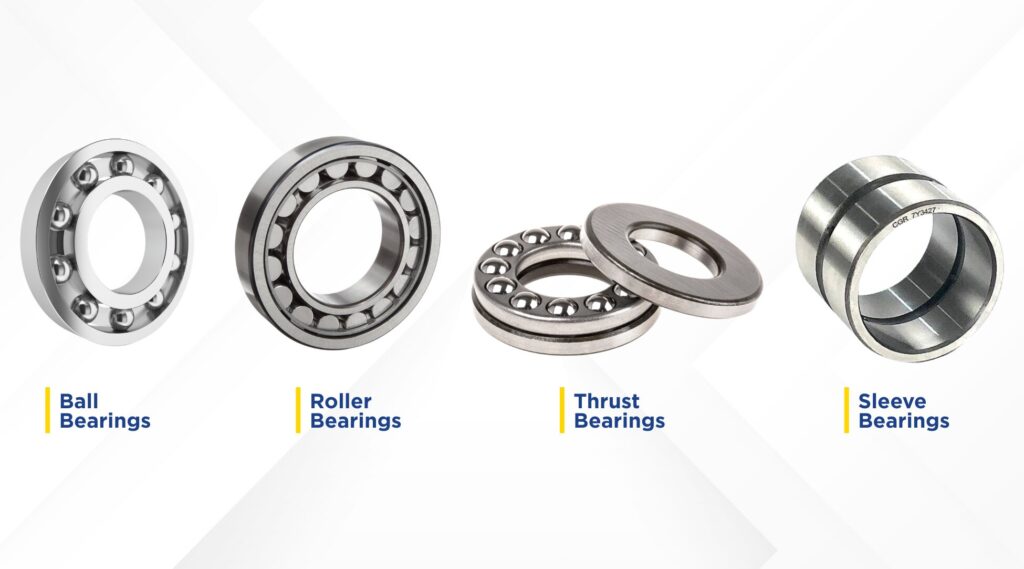
Ball Bearings
Ball bearings are widely used in electric motors, pumps, fans, and general industrial machinery where high-speed operation is common (typically 3,000 RPM and above). They generally benefit from:
- Low- to medium-viscosity oils (typically ISO VG 22–68) to minimize friction and heat generation
- Good oxidation stability for extended lubricant life
- Anti-wear (AW) additives for enhanced surface protection
Roller Bearings
Roller bearings, including cylindrical, tapered, spherical, and needle roller bearings, are commonly used in heavy-duty industrial equipment due to their higher load-carrying capacity. They generally require:
- Medium- to high-viscosity oils (typically ISO VG 68–220) to maintain adequate film strength
- Good load-carrying capability under heavy loads
- Anti-wear (AW) or Extreme Pressure (EP) additives for demanding applications
Thrust Bearings
Thrust bearings are designed to support axial loads and are commonly found in gearboxes, pumps, and rotating machinery. Recommended lubricant characteristics include:
- Appropriate viscosity to maintain film strength under axial loading
- Good thermal and oxidation stability, particularly for operating temperatures above 80°C
- Reliable protection against wear during continuous operation
Sleeve Bearings
Sleeve bearings rely on sliding contact rather than rolling elements, making consistent oil film formation essential. These bearings generally require:
- Medium- to high-viscosity oils (typically ISO VG 68–320) to maintain hydrodynamic lubrication
- Good film strength during continuous sliding operation
- Excellent oxidation stability for long service life
Choose the Right Bearing Oil
Fluid Solutions provides high-performance lubricants for bearings engineered for specific load, speed, and temperature requirements across industrial applications. Our portfolio includes mineral, synthetic, and specialty formulations designed to maximize bearing life.
Explore our range of industrial bearing oils in the Philippines. Contact us now:
- Telephone: (+63) 2 8370 5928
- Mobile: (+63) 917 894 9156
- Email: [email protected]
Stay updated on our latest products and technical insights: