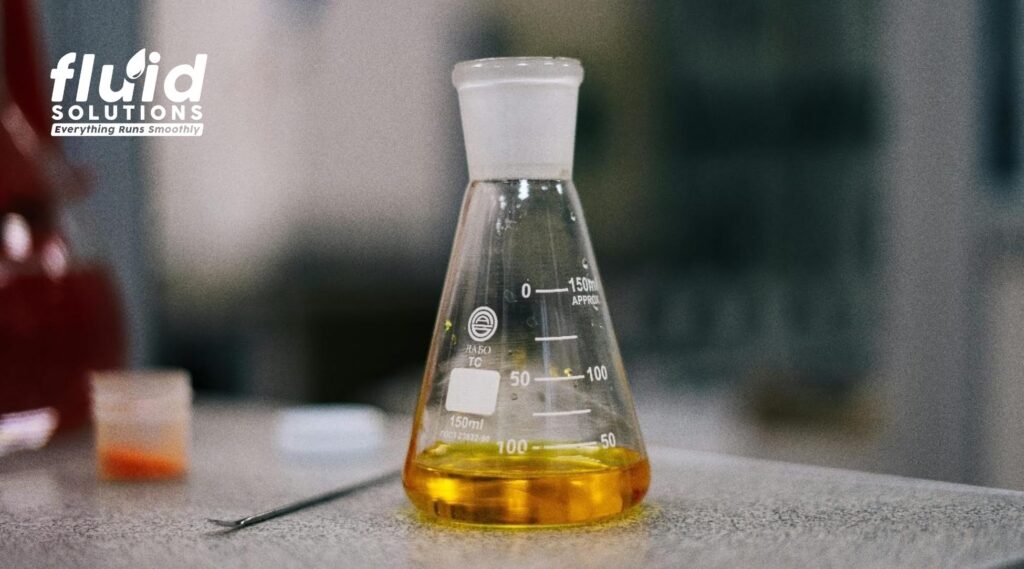
Ester-based lubricants, also known as synthetic ester lubricants, are synthetic fluids produced through esterification, a controlled chemical reaction where acids and alcohols combine to form ester compounds. These ester base oils exhibit a polar molecular structure that distinguishes them from conventional mineral oil systems.
This polarity enables strong adhesion to metal surfaces, improving lubricant film formation under boundary and mixed lubrication regimes. As a result, ester-based lubricants are widely used in industrial applications where equipment is exposed to high mechanical stress, temperature extremes, and high-speed operations, requiring stable and long-lasting lubrication performance.
Composition of Ester-Based Lubricants
- Ester Base Oils (85–98%)
Derived from controlled esterification reactions between carboxylic acids and alcohols, ester base oils form the primary fluid matrix of synthetic ester lubricants. These include diesters, polyol esters (POE), and complex ester blends engineered for specific performance requirements.
- Typical Additives Blended (2–15%)
- Anti-wear & EP additives – improve load-carrying capacity in high-pressure zones (gears, compressors)
- Antioxidants – enhance oxidation resistance and extend lubricant life at high temperatures
- Corrosion & rust inhibitors – enhance the lubricant’s protective barrier against rust and corrosion
- Anti-foam agents – minimize foam and air entrainment for stable lubrication film performance
Key Strengths
Ester-based lubricants exhibit a combination of physical and chemical properties that make them suitable for demanding industrial environments where conventional mineral oils may experience performance limitations.
- Thermal stability under elevated operating conditions: Synthetic ester lubricants maintains structural integrity at high temperatures, reducing oxidation and extending service life
- Enhanced lubricity and surface affinity: The polarity of ester base oils enables stronger adhesion with metal surfaces, improving lubricant film formation.
- Stable viscosity across temperature ranges: Ester-based lubricants provide more consistent viscosity over a wide temperature range, under fluctuating loads and temperatures.
- Improved additive compatibility and efficiency: The inherent polarity of ester-based lubricants enhances additive solubility and stability, allowing a wide range of additives, such as anti-wear and corrosion-inhibiting additives, to perform more effectively.
Key Limitations
Despite their performance advantages, ester-based lubricants also present certain limitations.
- Hydrolysis sensitivity: May react with water at elevated temperatures, forming acidic by-products that reduce stability and increase wear under moisture contamination.
- Costlier: Synthetic ester lubricants are more complex and expensive to produce compared to mineral oil-based lubricants. This results in higher production costs and, consequently, higher acquisition costs for end users.
- Seal and material compatibility: Certain elastomers, seals, and polymer-based components may exhibit compatibility limitations when exposed to ester-based lubricants. Checking seal compatibility is necessary before conversion or initial use to prevent material degradation or leakage issues over time.
Ester-Based Lubricants vs Mineral-Based Lubricants
| Characteristics | Ester-Based Lubricants | Mineral-Based Lubricants |
| Base Oils | Synthetic oils derived from esterification of acids and alcohols | Refined petroleum-based hydrocarbons |
| Thermal Stability | Typically up to 180–220°C | Ranges to 80–100°C |
| Viscosity Stability | Typically 140–200+ | Typically 90–120 |
| Additive Solubility | High solvency improves additive performance | Limited solvency compared to esters |
| Deposit Formation | Lower tendency to form sludge and varnish | Higher risk of deposit formation |
| Seal Compatibility | Limited compatibility with elastomers | Generally compatible with conventional seal materials |
| Cost | Generally higher priced | Lower cost |
Applications of Ester-Based Lubricants
Ester-based lubricants are widely used across various industrial applications such as:
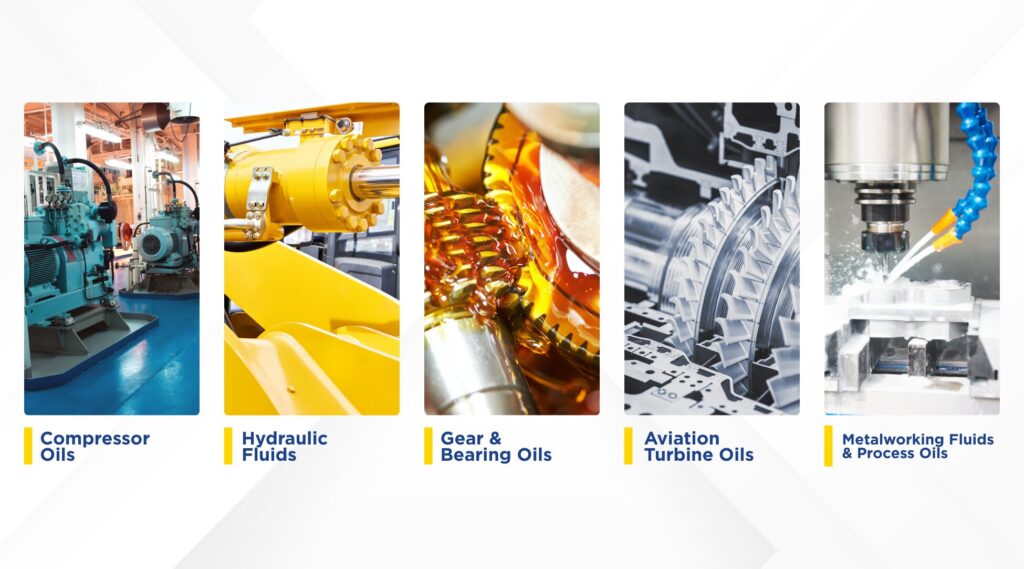
- Compressor Oils (Refrigeration, Industrial, and Vacuum Systems): Used across refrigeration compressors (POE systems), industrial air compressors, and vacuum pumps due to excellent oxidation stability, strong lubricity, low deposit formation, and reliable performance under continuous load and varying pressure conditions.
- Hydraulic Fluids: Support high-pressure hydraulic systems with stable viscosity, improved wear protection, and efficient energy transfer under variable operating conditions.
- Gear and Bearing Oils: Deliver strong film strength and anti-wear performance in heavily loaded gear systems and high-speed bearing applications.
- Aviation Turbine Oils: Used in aircraft engines due to excellent thermal stability, low volatility, and reliable performance under extreme operating temperatures.
- Metalworking Fluids and Process Oils: Enhance lubrication and cooling in machining operations while improving surface finish and reducing tool wear.
Choose Ester-Based Lubricants For Enhanced Protection
Fluid Solutions provides a wide portfolio of industrial lubricants and greases, including ester-based lubricants engineered for demanding conditions and supports users with local technical expertise and responsive supply across the Philippines. Our technical experts aim to help end-users improve reliability, extend service intervals, and support long-term operational efficiency.
For trusted industrial lubrication in the Philippines, contact us today:
- Telephone: (+63) 2 8370 5928
- Mobile: (+63) 917 894 9156
- Email: [email protected]
Stay updated on our latest products and technical insights: