Purification is the stage between milling and crystallization: raw juice extracted from the mills is heated, limed, clarified, filtered, and concentrated before it reaches the pans. Each machine in this line operates under different temperatures, loads, and levels of moisture, creating distinct lubrication requirements for sugar plant equipment.
Key Takeaways
- Purification moves raw juice through four main machine groups — juice heaters, clarifiers, rotary vacuum filters, and multiple effect evaporators — each with distinct thermal, mechanical, and chemical stress profiles.
- Juice heaters operate in a hot, humid environment where steam and condensate are common, which can accelerate grease degradation and promote grease washout.
- Clarifiers use worm or helical gear reducers to drive slow-moving mechanisms under continuous, low-speed, high-torque load.
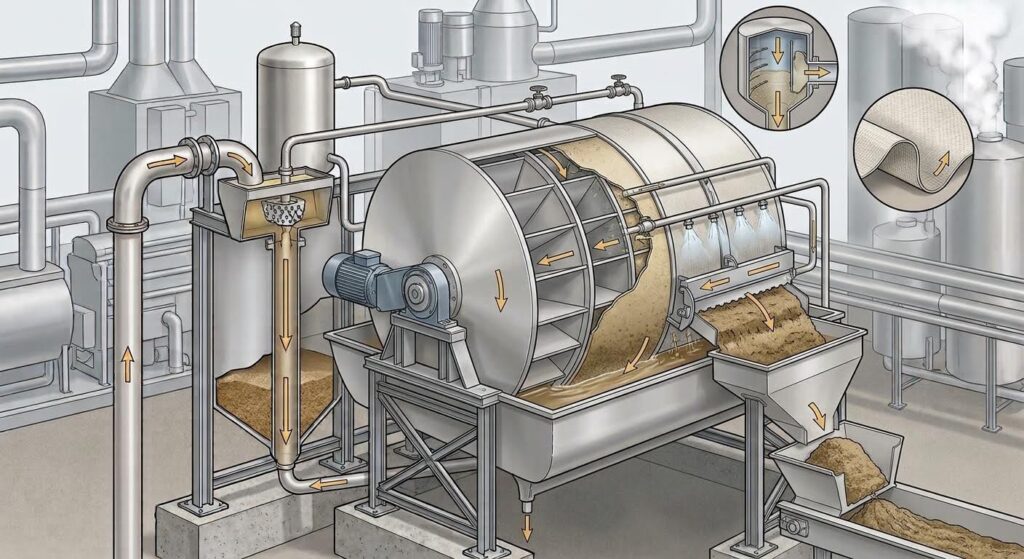
- Rotary vacuum filters recover residual sugar from clarifier mud by pulling it through a rotating drum under vacuum to separate the filtrate from the filter cake.
- Multiple effect evaporators operate at elevated temperatures, with associated pumps and valves experiencing frequent thermal cycling.
- Because each machine group operates under different conditions, lubrication requirements vary across the purification stage.
Machines Used During Phase 2 (Purification)
Purification moves raw juice through four main machine groups, each with distinct thermal, mechanical, and chemical stress profiles. These machines are critical sugar refinery equipment used to prepare juice for the crystallization stage.
Juice Heaters
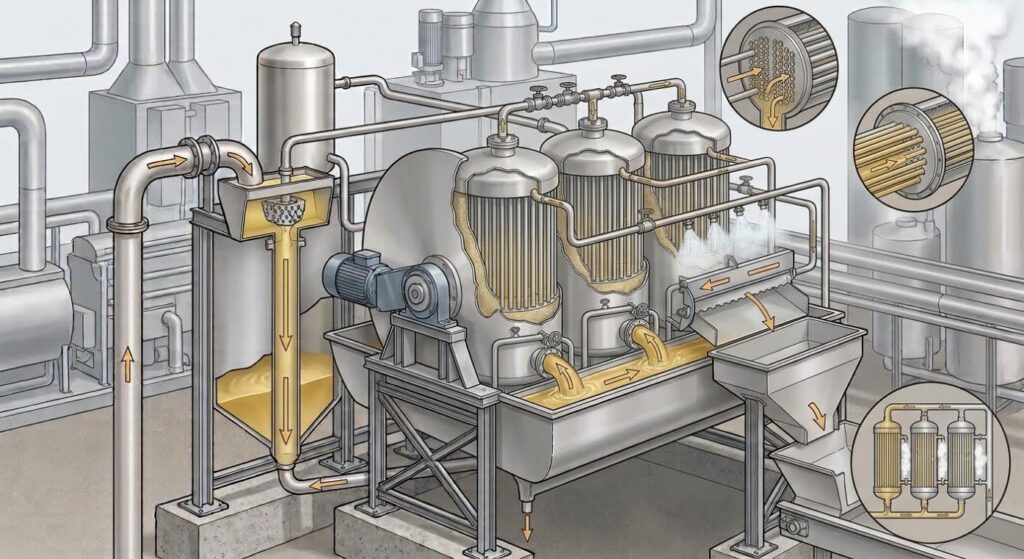
Juice heaters heat raw juice in stages, typically to around 100–105°C before liming and once more after clarification, before the juice enters evaporation. Shell-and-tube or plate heat exchangers, along with associated pumps and bearing assemblies, operate in a hot, humid environment where steam and condensate are common.
Clarifiers
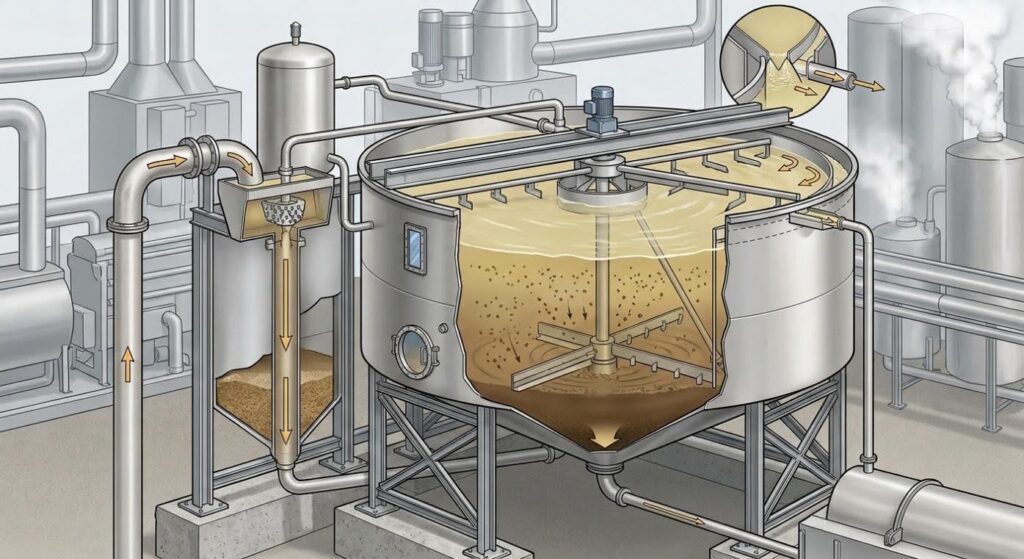
Rotary vacuum filters recover residual sugar from clarifier mud, pulling it through a rotating drum under vacuum to separate filtrate from the filter cake.
Multiple Effect Evaporators
Multiple effect evaporators concentrate clarified juice into syrup, boiling it across a series of vessels under progressively lower pressure and reusing vapor from one effect to heat the next. Rotating equipment such as condensate extraction pumps, vapor line valves, and juice circulation pumps operate at elevated temperatures with frequent thermal cycling.
Read Next: Juice Heater Lubrication
Purification depends on more than the machines it runs through; it starts with how effectively juice is heated before liming, and clarification even begins. Read more in the next article in this series, Lubrication for Sugar Mills, Phase 2: Juice Heaters, for a closer look at heater-specific lubrication practices and how to prevent steam-related grease washout.
Get in Touch
For guidance on matching lubricants to your plant’s purification-stage sugar processing machinery, reach out to Fluid Solutions, Inc.
- Telephone: (+63) 2 8370 5928
- Mobile: (+63) 917 894 9156
- Email: [email protected]
Stay updated on our latest products and technical insights:
- Facebook: https://www.facebook.com/fluidsolutionsinc
- LinkedIn: https://www.linkedin.com/company/fluid-solutions-inc
Frequently Asked Questions
Why can’t one lubricant type cover the whole purification line?
Each machine group faces a different combination of temperature, speed, torque, and moisture exposure. Juice heaters need washout-resistant grease, clarifiers need EP gear oil, vacuum filters need emulsification-resistant pump oil, and evaporators need oxidation-resistant oil rated for sustained heat — treating these as interchangeable is a common cause of premature bearing and seal failure.
Why do clarifier gear reducers need EP gear oil even though they run at low speed?
Low speed doesn’t mean low stress — clarifier drive trains run continuously; high-torque load through worm or helical gear reducers. Without strong EP additive packages, that combination leads to micro-pitting on slow-turning gear teeth over time.
How does steam and condensate affect lubrication around juice heaters?
Juice heaters operate in a hot, humid environment where steam and condensate are common. Repeated exposure can accelerate grease degradation and promote grease washout, making lubrication around heater pumps and bearing assemblies particularly important.
Why is thermal cycling a lubrication concern in multiple-effect evaporators?
Equipment associated with multiple-effect evaporators operates at elevated temperatures and experiences frequent thermal cycling. These changing conditions place additional stress on lubricants used in rotating equipment such as condensate extraction pumps and juice circulation pumps.