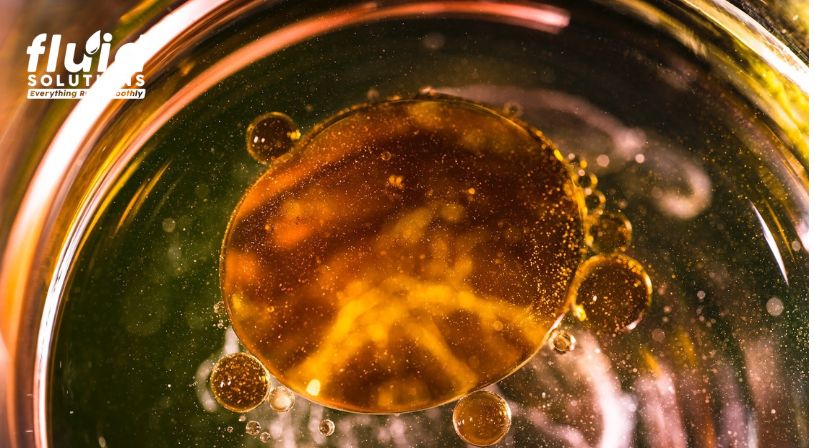
Monitoring filtered oil verifies filtration performance and catches contamination ingress before wear escalates within the system. Targeted checks are employed to confirm ISO cleanliness codes, pressure drops, and additive stability.
What is Filtered Oil?
Filtered oil is lubricant processed through mechanical, absorptive, or electrostatic media to remove solid particles, water, varnish, and oxidation byproducts. It results from targeting ingress at seals, breathers, and wear sources while retaining additives for hydraulic and gear systems. This conditioned oil sustains viscosity and film strength in industrial equipment.
Why Monitoring Filtered Oil Matters?
Filtered oil monitoring verifies filtration performance and detects contamination ingress before wear accelerates in hydraulics and gearboxes. These regular checks confirm cleanliness codes and pressure drops. Monitoring filtered oil provides several key benefits including:
- Component Protection: Monitoring catches wear particles and dust before they bypass clogged filters, preventing pump scoring, cylinder drift, and spindle failures.
- Operating Efficiency: Monitoring ensures clean oil maintains proper clearances and stable lubrication films, cutting friction losses in turbines, motors, and hydraulic actuators during peak loads.
- Filter Reliability: Regular checks prevent bypass from pressure spikes, extending filter element life and maintaining consistent contaminant removal.
Key Indicators of Filtered Oil Quality
Certain measurable indicators can be used to judge the quality of filtered oil. Knowing these key factors helps minimize contaminants, preserve lubrication efficiency, and maintain reliable equipment performance over time.
1. Particle Count & Cleanliness
Standard: Particle counts must adhere to target ISO 4406 or NAS 1638 cleanliness codes specific to the equipment. There should be no abnormal increases in fine or hard particles.
Deviation: High counts typically indicate ineffective filtration, external system contamination, or damaged filter elements.
2. Water Contamination
Standard: Oil moisture content must be below the saturation point and at the lowest measurable ppm to ensure chemical stability and prevent additive washout.
Deviation: Monitor for a milky appearance, visible rust spots, or ice crystals in lines operating in cold environments.
3. Viscosity Stability
Standard: Viscosity must be within specified ranges at apt operating temperatures to ensure adequate film strength.
Indicators: Significant shifts, such as thickening from oxidation or thinning from fuel dilution.
4. Oxidation and Acidity (TAN)
Standard: Oxidation and Total Acid Number (TAN) levels must be maintained at or near the new-oil baseline to preserve the lubricant’s protective chemistry.
Indicators: Watch for darkening oil color or a TAN increase significantly above the established baseline.
5. Visual Condition and Clarity
Standard: Oil color and clarity serve as a primary diagnostic for dirt, water, or excessive heat exposure.
Indicators: Hazy, exceptionally dark, or sediment-laden oil indicates immediate mechanical or environmental issues.
Best Ways to Monitor Filtered Oil Effectively
With the key indicators stated, specific monitoring methods must be implemented to track each of these properties. Utilizing these technical approaches allows for precise oversight of lubricant health and filtration efficiency.
1. Automatic Laser Particle Counting
This procedure utilizes high-precision laser sensors to quantify the size and concentration of solid contaminants within a fluid sample. It is the most reliable way to verify that filtration systems are achieving target cleanliness.
Indicator Checked: This process monitors Particle Count and Cleanliness by verifying the oil meets ISO 4406 or NAS 1638 standards. It identifies abnormal increases in abrasive silt or hard particles, allowing for corrective action before significant component wear occurs.
2. Karl Fischer Titration
This laboratory-grade chemical analysis (ASTM D6304) determines the exact moisture content in oil via coulometric or volumetric titration. It provides a level of precision that is impossible to achieve through visual inspection alone.
Indicator Checked: This test monitors Water Contamination in ppm (parts per million). By detecting dissolved moisture long before the oil appears “milky,” it prevents the degradation of additives and the formation of rust in pumps and cylinders.
3. Kinematic Viscometry
The flow rate of a fixed volume of oil is measured through a calibrated capillary tube at controlled temperatures (40°C or 100°C). This defines the lubricant’s internal resistance to flow under specific operating conditions.
Indicator Checked: This assesses Viscosity Stability to ensure the fluid maintains its protective film strength. It identifies thickening from oxidation or thinning from fuel dilution, verifying the oil stays within its specified ISO or SAE grade.
4. Potentiometric Titration (TAN)
A measured amount of potassium hydroxide (KOH) is added to the oil sample to neutralize its acidic constituents. The resulting Total Acid Number provides a quantitative look at the oil’s chemical state.
Indicator Checked: This tracks Oxidation and Acidity (TAN). By measuring the accumulation of acidic byproducts, it signals when antioxidant reserves are depleted and helps predict the formation of sludge or varnish.
5. Visual Inspection and Blotter Spot Testing
This field-level diagnostic combines sensory evaluation of oil clarity with paper chromatography. A drop of oil is placed on specialized paper to observe how soot and contaminants disperse from the center.
Indicator Checked: This evaluates Visual Condition and Clarity. It provides immediate feedback on gross issues like water-induced haziness or sediment-laden oil, identifying poor dispersancy or excessive heat exposure that requires further laboratory investigation.
Optimizing Your Fluid Reliability with Fluid Solutions
Maintaining oil integrity requires more than just high-quality lubricants; it requires a rigorous monitoring strategy. Fluid Solutions provides the high-performance fluids, technical expertise, and advanced diagnostic tools necessary to verify your filtration efficiency and protect your operations.
For inquiries, call (02) 8370 5928, 0917 894 9156, or email us at [email protected].
Follow us for more insights and updates:
Facebook: https://www.facebook.com/fluidsolutionsinc
LinkedIn: https://www.linkedin.com/company/fluid-solutions-inc