Phase 3 of sugar processing machinery converts concentrated syrup, typically arriving at 60 to 65 Brix from the evaporator station, into crystalline sugar through controlled boiling, cooling, and mechanical separation. Four machine types carry this stage: vacuum pans, crystallizers, centrifugal, and sugar dryers and graders, each running under a different combination of heat, moisture, and mechanical load that shapes its lubrication requirements.
At this stage, lubrication in sugar production becomes particularly important because equipment must operate reliably while managing conditions ranging from high temperatures and sustained loads to sugar dust and potential product contact.
Key Takeaways
- Phase 3 covers four main machines: vacuum pans, crystallizers, centrifugals, and sugar dryers/graders.
- Vacuum pans face high-temperature steam and vacuum-related sealing conditions.
- Crystallizers require lubrication suited for continuous, low-speed loads in warm, humid conditions.
- Centrifugals place bearings under high-speed, cyclic loads and require attention to potential product contact.
- Dryers and graders require protection against fine sugar dust and abrasive contamination.
- Equipment near exposed sugar should use appropriate food-grade lubricants where incidental food contact may occur.
Machines Used During Phase 3
The following machines support the crystallization and finishing stages of sugar production, with each operating under distinct conditions that influence its lubrication requirements.
Vacuum Pans
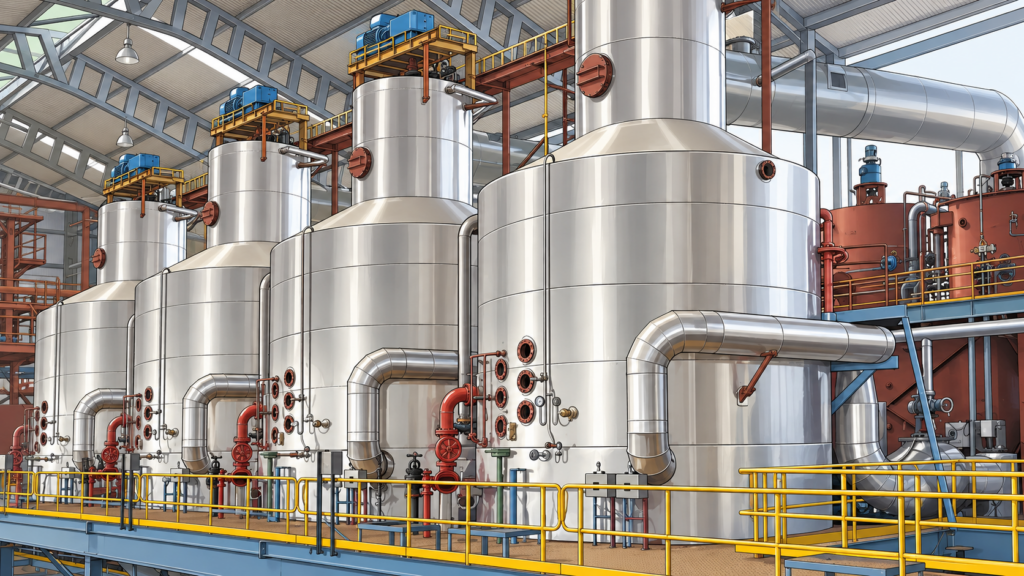
Vacuum pans boil syrup under reduced pressure, allowing crystallization to begin at a lower temperature than atmospheric boiling would require, and the operator controls this stage carefully to seed and grow a consistent crystal size. The pan’s steam coils, vacuum system, and any mechanical agitation add up to a piece of sugar plant equipment that combines high-temperature steam exposure with the same vacuum-side sealing challenges seen earlier in the evaporator station.
Crystallizers
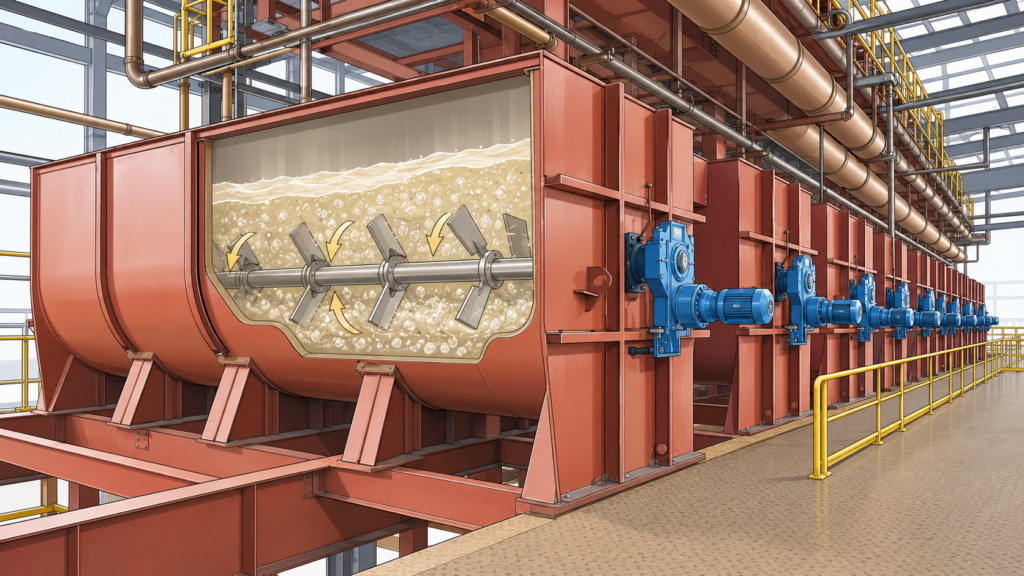
Once the pan discharges massecuite—a mixture of sugar crystals and mother liquor—it moves into the crystallizers. There, it cools gradually under continuous slow agitation. This process allows the crystals to grow further while recovering as much sugar as practical from the remaining liquor. The agitator drivetrain runs continuously for hours per batch, placing sustained, low-speed load on its bearings and gear reduction in a warm, humid vessel environment.
Centrifugal
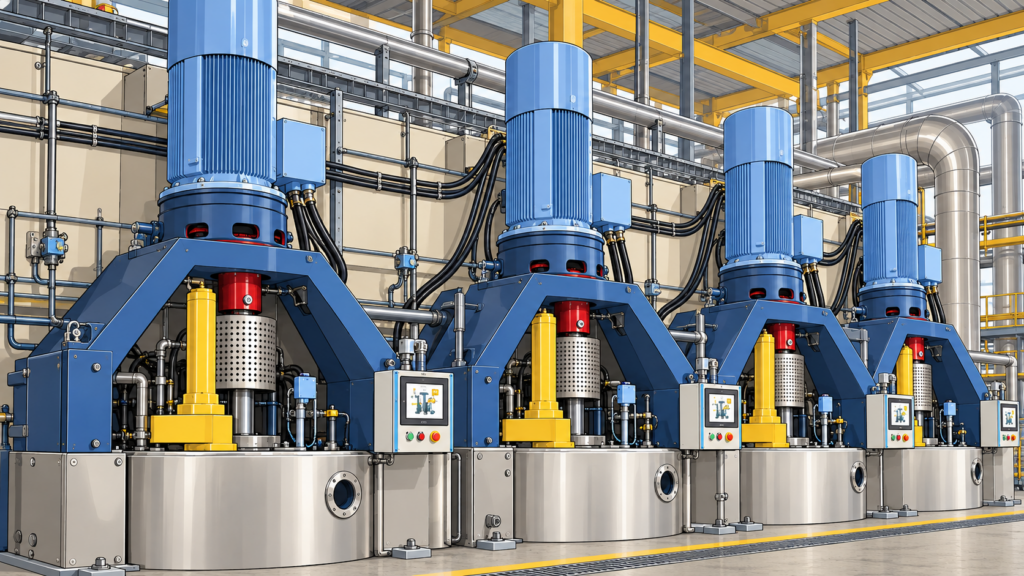
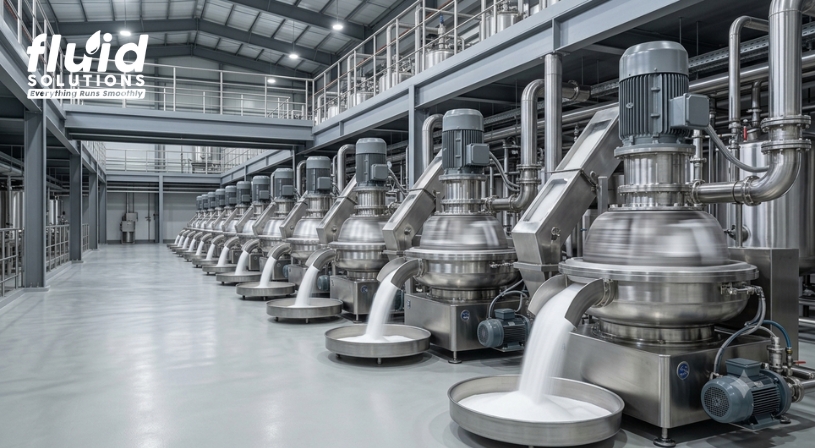
Centrifugal spin massecuite at high speed, commonly several thousand RPM, so centrifugal force throws molasses through a perforated basket screen while retaining the sugar crystals inside. Sugar centrifugal represent one of the more demanding lubrication points in the entire mill: basket bearings see high rotational speed and cyclic loading as the machine accelerates and decelerates between batches, and any lubricant migration toward the basket risks direct product contact.
Sugar Dryers and Graders
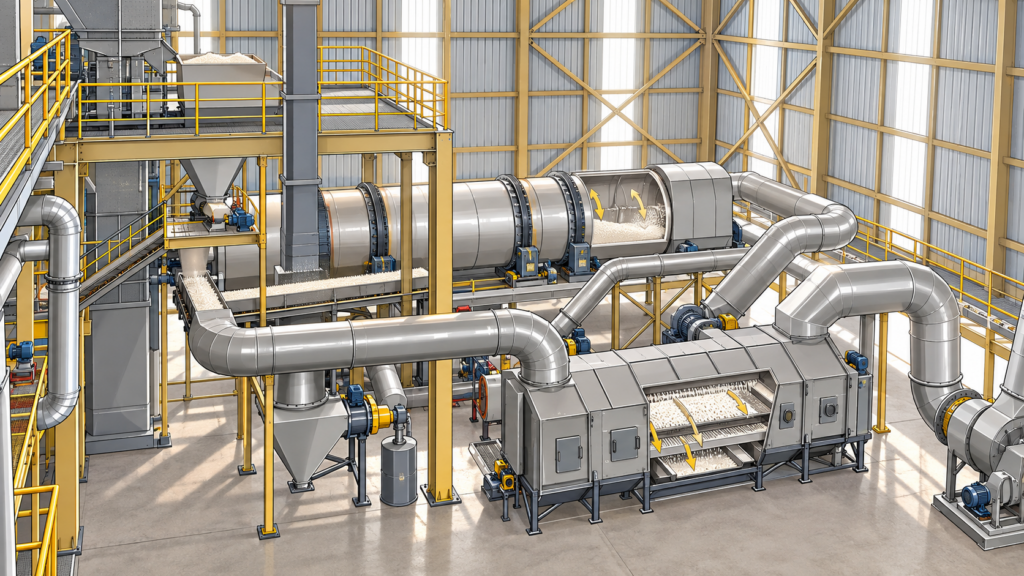
Finished crystals leave the centrifugal still slightly moist and pass through a dryer, typically a rotating drum with heated air, before grading equipment sorts them by particle size ahead of bagging or bulk storage. Bearings on the dryer drum and grading screens face a different challenge than the wet stages upstream: fine sugar dust infiltrates seals readily, and abrasive particulate contamination is the primary threat to bearing life at this point in the line.
What’s Next in the Series
Future entries in this series will go deeper on individual machines within Phase 3, starting with the specific bearing, gearbox, and seal lubrication points on vacuum pans and centrifugals, where operating conditions vary the most across different sugar refinery equipment.
For help matching the right grease to your crystallization and finishing line, or sourcing from food grade grease suppliers in the Philippines for product-contact points, reach out to Fluid Solutions, Inc.
Get in Touch
- Telephone: (+63) 2 8370 5928
- Mobile: (+63) 917 894 9156
- Email: [email protected]
Stay updated on our latest products and technical insights:
- Facebook: https://www.facebook.com/fluidsolutionsinc
- LinkedIn: https://www.linkedin.com/company/fluid-solutions-inc
For additional guidance, below are answers to common questions about lubrication for crystallization and finishing equipment.
Frequently Asked Questions
Why do centrifugal baskets need food-grade grease when other mill equipment doesn’t? Centrifugals sit close to, and can come into direct contact with, finished sugar. Any lubricant migration toward the basket during high-speed operation risks contaminating a product-contact surface, which is why H1-registered, ISO 21469-rated grease is standard at this point rather than a general industrial product.
Why is dust the primary concern at the dryer and grader stage rather than heat or moisture? By this point, sugar crystals are only slightly moist and moving through heated air rather than through the wet, humid conditions typical of earlier stages. Fine sugar dust infiltrates seals readily here, making particulate contamination the faster path to bearing failure compared to heat or moisture.
What makes centrifugal bearings more demanding than crystallizer bearings? Centrifugals spin at several thousand RPM with cyclic loading as the machine accelerates and decelerates between batches, combined with food-contact proximity risk. Crystallizer agitators, by contrast, run continuously but at low, steady speed, which is a fundamentally different load profile requiring a different film strength.
What does H1-registered mean for a grease? It refers to NSF H1 registration, which designates a lubricant as acceptable for incidental food contact — relevant here because centrifugal baskets, dryer drums, and grading screens all sit within splash or dust distance of exposed sugar.