Varnish forms gradually in hydraulic systems from the chemical degradation of oil exposed to heat, pressure, and contaminants, generating insoluble byproducts that precipitate as deposits. These affect system performance by accumulating in critical areas like valves and pumps. This article details varnish characteristics, causes, detection, removal, and prevention strategies.
What Is Hydraulic Fluid Varnish?
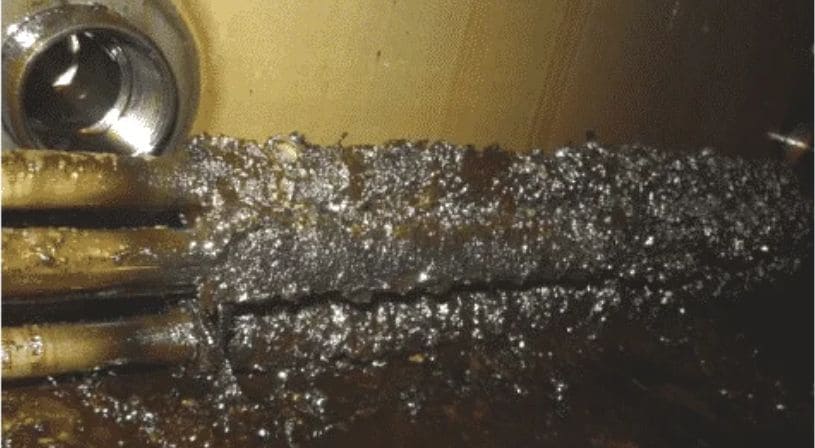
Hydraulic fluid varnish consists of thin, adhesive layers of oxidized oil residues, primarily soft, submicron particles (<0.1 microns), that deposit on internal surfaces like valve housings, reservoirs, and control blocks. Formed from soluble oxidation precursors exceeding the oil’s solvency limit, these polar molecules agglomerate in cooler zones where temperature drops reduce solubility. Even thin films disrupt precision tolerances, causing sticking in servo valves and spools during rapid movements.
How Varnish Affects the Hydraulic System?
Varnish affects hydraulic performance in several critical ways, such as:
- Reduced Valve Responsiveness
Sticky varnish residues accumulate on valves and spools, causing erratic movement, sticking, or chatter. This disrupts precise control and fluid regulation, especially in systems with tight tolerances. - Increased Friction and Wear
Varnish acts as a microscopic abrasive, increasing friction within moving components such as valves, pumps, and bearings, accelerating wear. - Impaired Heat Dissipation
Varnish deposits form insulating layers on heat exchangers and internal surfaces, reducing the system’s ability to dissipate heat. Elevated temperatures accelerate oil degradation, creating more varnish in a reinforcing cycle. - Clogged Filters and Flow Restrictions
Varnish particles slough off and block filters, restricting oil flow. Restricted flow can lead to starvation in critical components, further damaging the system.
Root Causes of Varnish Build-Up in Hydraulic Systems
Varnish accumulates in hydraulic systems due to a combination of chemical reactions and operational stresses. Knowing these root causes enables more effective varnish control and system maintenance:
- Oxidation of Hydraulic Fluid
Heat is the primary catalyst of varnish formation. As hydraulic oil cycles through high temperatures, oxygen, and pressure, it oxidizes, generating acidic compounds and insoluble byproducts that become varnish precursors. - Poor Filtration and Contamination
The presence of water, dust, metal particles, and entrained air accelerates oil oxidation. When filtration is insufficient or overloaded, contaminants build up, overwhelming the oil’s additive system and increasing varnish-forming residues. - Electrostatic Discharge (ESD)
High-efficiency filters can generate electrostatic charges in high flow conditions. These charges produce micro-sparks that break down oil molecules into varnish precursors too small to be captured by standard filters. - Incompatible Fluids or Additives
Mixing different hydraulic oils or additives destabilizes the additive package and leads to the formation of sludge and hard varnish deposits, especially when switching brands or formulations. - Extended Oil Service Life Without Analysis
Hydraulic oils have a limited antioxidative lifespan. Overused oil with depleted antioxidants rapidly degrades, accelerating varnish formation if not monitored and replaced in time.
Early Detection: Identifying Signs of Varnish Formation
Performance & Visual Indicators
Early varnish formation manifests in subtle but telling ways, including:
- Sticky or erratic valve movement disrupting fluid control precision
- Sharp increases in operating temperature due to impaired heat dissipation
- Louder pump noises or increased vibration from friction and deposits
- Darkened hydraulic oil with a burnt smell indicating oxidation
- Slower hydraulic response times impairing system performance
- Brown, sticky film visible on valves, filters, or reservoir surfaces
If any of these symptoms appear, varnish presence is highly likely.
Testing Methods for Accurate Diagnosis
To verify varnish and gauge system health, use advanced testing methods:
- MPC (Membrane Patch Colorimetry) — Quantifies varnish potential (ASTM D7843) by filtering solvent-extracted oil through a fine membrane patch, then measuring color intensity (ΔE* scale: 0-15 normal, >40 critical). Higher values indicate insoluble varnish precursors.
- Remaining Useful Life Evaluation Routine (RULER) — Tracks remaining antioxidant levels via fluorescence, identifying depletion that signals impending oxidation and varnish formation. Low levels (<25% remaining) warrant action.
- Fourier Transform Infrared (FTIR) Spectroscopy — Detects oxidation byproducts, moisture, and additive depletion through spectral analysis, providing early warnings of chemical degradation leading to varnish.
Varnish Removal Methods for Hydraulic Systems
Varnish removal requires specialized techniques beyond standard filtration, as deposits resist conventional methods. Key approaches include:
- Chemical Cleaning and Flushing
Specialized cleaners circulate through the system to soften and dissolve varnish from components like valves and reservoirs. The dissolved residues suspend in the oil for draining, followed by flushing with clean fluid and refilling. Best for severe buildup affecting valve performance. - Advanced Filtration and Conditioning Units
Advanced conditioning technologies, such as electrostatic cleaners, ion-exchange systems, depth filters, and charge-agglomeration units, remove varnish precursors at a microscopic level. These systems restore oil clarity without requiring a shutdown. - Oil Replacement
For exhausted oil with depleted additives, complete drain-and-fill with fresh, high-stability fluid restores baseline performance after initial flushing.
Prevention Methods: Keeping Varnish from Returning
Effective varnish prevention targets root causes through proven operational and maintenance practices such as:
- Selecting High-Stability Hydraulic Fluids
Choose oils with premium synthetic base stocks and robust antioxidant packages engineered for varnish resistance. Verify compatibility before mixing hydraulic oil formulations. - Maintain Temperature & Cleanliness
Use high-efficiency bypass filtration (2–5 microns) and water-removal filters, and consider offline dewatering or degassing units to keep water content below 200 ppm and reduce air entrainment - Implement Routine Oil Analysis
Monitor quarterly using MPC (varnish potential), RULER (antioxidants), FTIR (oxidation), and particle counts to detect precursors early and extend oil life. - Eliminate Electrostatic Discharge (ESD)
Deploy conductive filters, grounding straps, and ESD-safe filtration media to prevent micro-sparking that generates varnish precursors - Optimize System Design
Enhance reservoir turnover rates, improve heat exchangers, and address thermal hotspots in pumps/valves to reduce localized degradation.
Ensure Hydraulic System Reliability with Fluid Solutions
Preventing varnish starts with using the correct hydraulic fluid and maintaining proper system conditions. Fluid Solutions features a wide array of hydraulic oils with strong varnish resistance, formulated with stable base oils and effective antioxidant additives.
Explore our full product lineup here: https://fluidsolutions.com.ph/products/
For consultation or product availability, contact us at (02) 8370 5928, 0917 894 9156, or [email protected].
Stay updated on our latest products and technical insights:
Facebook: https://www.facebook.com/fluidsolutionsinc
LinkedIn: https://www.linkedin.com/company/fluid-solutions-inc