[Image Alt Text: Navigating Synthetic Lubricants: Types and Advantages]
Synthetic Oils
Synthetic oils are precisely engineered lubricants formulated in laboratories to meet specific performance criteria. They are produced chemically, to perform better than Group I, Group II, and Group III mineral-based oils. The molecular structures of synthetic base oils are tailor-made to be smaller, uniform, and more stable, ensuring optimal performance across diverse applications.
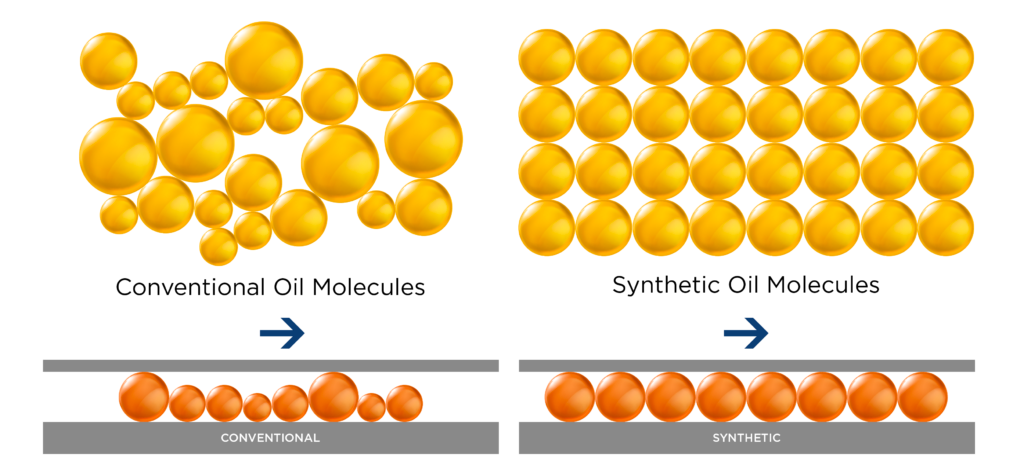
[Image Alt Text: Molecular Structure of Synthetic Oil vs. Conventional Oil]
Common Types of Synthetic Oils
Polyalphaolefin (PAO)
PAO synthetic oils are known for their excellent thermal stability and resistance to oxidation. They perform well across a broad temperature range, making them suitable for both high and low-temperature applications.
Ester-based Oils
Ester-based synthetic oils are celebrated for their superior lubricity and biodegradability. Often chosen for applications requiring extreme pressure and temperature resistance, these oils provide exceptional performance.
Polyalkylene Glycol (PAG)
PAG synthetic oils are valued for their outstanding anti-wear and extreme pressure properties. They find common usage in industrial gearboxes and hydraulic systems.
Advantages of Synthetic Oils Over Mineral Oils
Temperature Stability
Synthetic oils exhibit superior thermal stability, resisting breakdown at high temperatures. This characteristic ensures consistent lubrication performance, even in demanding operating conditions.
Oxidation Resistance
Synthetic oils are less prone to oxidation compared to mineral oils. This resistance minimizes the formation of sludge and deposits, promoting cleaner and more efficient machinery operation. Moreover, compared to mineral oils, synthetic oils can be generally used for extended durations.
Wear Protection
The molecular precision in synthetic oils provides enhanced wear protection, reducing friction and extending the lifespan of machinery components. This is particularly advantageous in high-stress environments.
Cold-Weather Performance
Synthetic oils maintain their fluidity in cold temperatures, unlike mineral oils that can thicken. This property ensures effective lubrication even in sub-zero conditions, a critical factor for machinery operating in diverse climates.
Semi-Synthetic Lubricants
Semi-synthetic lubricants, also known as blends, combine synthetic and mineral oil components. This hybrid approach aims to harness the benefits of both types while managing costs effectively. Semi-synthetics offers improved performance over pure mineral oils, providing a cost-effective solution for various applications. However, they do not perform well when mixed with synthetic oils.
Consult with Lubrication Experts
For businesses seeking to optimize machinery performance, consulting with lubrication experts is invaluable. These professionals can assess specific operational requirements, recommend the most suitable synthetic oils or blends, and guide maintenance practices. Their expertise ensures that businesses make informed decisions, optimizing machinery performance and minimizing downtime.
Maximize Machinery Performance with Expert Lubrication Solutions
Fluid Solutions is the best industrial lubrication solutions provider in the Philippines. Our team of experts can assist you with synthetic oil costs and the difference between full synthetic oil and blends that you’ll need to make informed choices. Contact Fluid Solutions today at (02) 8370 5928 / (0917) 844 9156 or via email at [email protected] to learn more about how we can enhance the performance and longevity of your equipment.