In a previous article, MOSH-, MOAH-, and POSH-free lubricants were defined as specialized industrial lubricants formulated to contain extremely low levels of Mineral Oil Saturated Hydrocarbons (MOSH), Mineral Oil Aromatic Hydrocarbons (MOAH), and Polyolefin Oligomeric Saturated Hydrocarbons (POSH). These lubricants are commonly used in food processing and pharmaceutical environments, where minimizing the risk of lubricant contamination in food, beverages, medicines, and other market products intended for human consumption is critical.
But how is this level of purity verified?
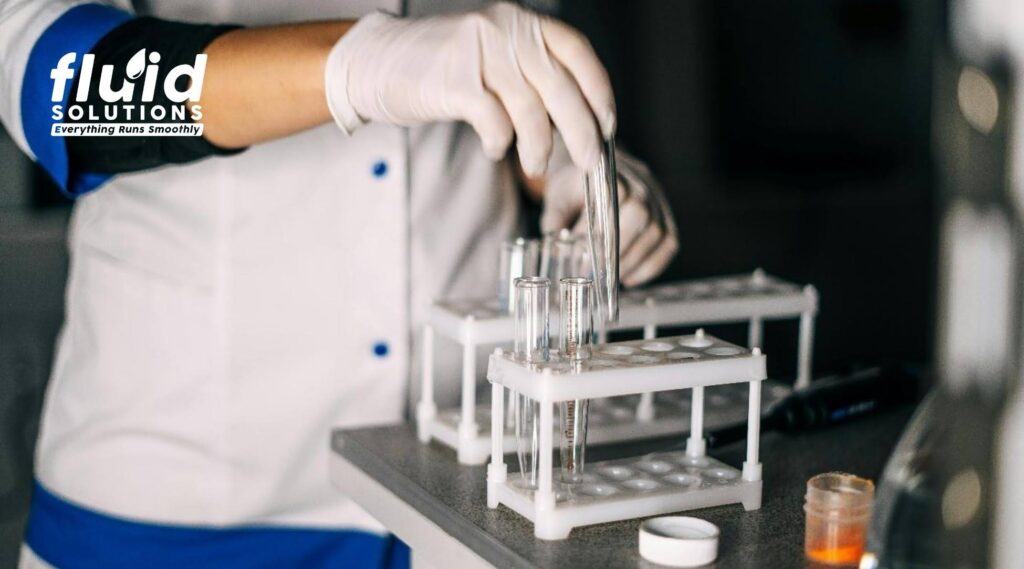
To confirm that a lubricant meets MOSH-, MOAH-, and POSH-free standards, independent laboratories employ specialized analytical techniques designed to detect and quantify these contaminants even at very low concentrations. The following sections outline the key testing methods used to verify lubricant purity and support compliance claims.
Testing Methods for MOSH-, MOAH-, and POSH-Free Lubricants
MOSH-MOAH testing, also known as Mineral Oil Hydrocarbon (MOH) analysis, is an analytical testing framework used to detect and quantify mineral oil hydrocarbons in lubricants. It provides the technical basis for verifying whether a lubricant is truly MOSH-, MOAH-, and POSH-free by identifying trace levels of:
- MOSH (Mineral Oil Saturated Hydrocarbons)
- MOAH (Mineral Oil Aromatic Hydrocarbons)
- POSH (Polyolefin Oligomeric Saturated Hydrocarbons)
The primary objective of MOSH-MOAH testing is to confirm that these compounds are either absent or remain below acceptable limits, helping support food safety requirements and regulatory expectations.
What Does MOSH-MOAH Testing Cover?
MOSH-MOAH testing, or MOH analysis, refers to an overall testing framework rather than a single analytical method.
It typically includes:
- Sample extraction and preparation
- Chromatographic separation techniques
- Fraction identification and quantification
- Reporting and compliance interpretation
Together, these steps enable laboratories to accurately identify hydrocarbon contaminants, even at very low concentrations within complex industrial lubricant formulations.
- Chromatographic Methods (Core Testing Techniques)
Chromatographic methods are the primary analytical tools used within MOH analysis. These techniques separate hydrocarbon fractions based on their molecular structure and chemical properties, allowing laboratories to distinguish between MOSH and MOAH components.
The most common methods include:
- Liquid Chromatography (LC) – Liquid Chromatography serves as the initial separation step following sample preparation. Key functions include:
- Using a silica-based column to separate hydrocarbon fractions
- Isolating saturated hydrocarbons (MOSH) from aromatic hydrocarbons (MOAH)
- Producing cleaner fractions for subsequent analysis
- Gas Chromatography (GC-FID) – Gas Chromatography with Flame Ionization Detection (GC-FID) is typically performed after LC fractionation. Its primary functions include:
- Used after LC fractionation
- Provides quantitative measurement of hydrocarbon fractions
- Detects MOSH and MOAH across a wide molecular weight range
- Commonly used for routine compliance and quality control
Liquid Chromatography (LC) and Gas Chromatography (GC-FID) are often used together to improve accuracy. This combined approach enhances separation of complex hydrocarbon mixtures, reduces analytical interference, and supports reliable MOSH and MOAH quantification in industrial lubricants and food-contact materials.
- Two-Dimensional Chromatography (GC×GC)
For highly complex samples or applications requiring greater analytical sensitivity, laboratories may employ two-dimensional gas chromatography (GC×GC) as an advanced extension of conventional GC testing.
This method is typically applied for:
- Confirmatory testing
- Regulatory investigations
- High-risk or high-purity food production environments
How GC×GC works:
- First-Dimension Separation
- Separates compounds according to volatility or boiling point range.
- Second-Dimension Separation
- Further separates compounds based on their chemical interactions with the chromatographic column.
- Improves differentiation between closely related hydrocarbon compounds.
Because of its significantly higher resolution, GC×GC is generally reserved for confirmatory analysis and advanced investigations rather than routine testing. Its enhanced separation capability provides greater confidence when verifying the absence of MOSH, MOAH, and other hydrocarbon contaminants in critical applications.
Achieve MOSH-, MOAH-, and POSH-Free Manufacturing
Ensure food safety and compliance with MOSH-, MOAH-, and POSH-free lubricants formulated to minimize the risk of mineral oil hydrocarbon contamination, particularly in applications where incidental food contact may occur. Fluid Solutions offers a comprehensive range of industrial oils and greases engineered for regulated food-processing environments, supported by technical expertise.
For trusted industrial lubrication in the Philippines, contact us today:
- Telephone: (+63) 2 8370 5928
- Mobile: (+63) 917 894 9156
- Email: [email protected]
Stay updated on our latest products and technical insights: