
Engine oil plays the crucial role of lubricating, cooling, and cleaning your vehicle’s engine. Aside from following the standard change oil schedule, it is important to choose the right engine oil for your vehicle as different engine types need different engine oil formulation. In this guide, we will explore the different types of engine oils, viscosity ratings, and where to find the best-matched engine oil supplier in the Philippines.
Engine Oil Functions and Importance
The function of engine oil
Engine oil serves several critical functions in maintaining and protecting your engine:
- Lubrication: It lubricates moving parts to reduce the damaging friction inside, thereby increasing the lifespan of your engine.
- Cooling: Inside your engine, the metal components can go as high as 315°C, and the lubricant absorbs a large percentage of the heat generated by friction.
- Cleaning: Quality oil prevents the buildup of sludge, which can clog the narrow oil passages in your engine. Without lubricant flow, your vehicle’s fuel consumption increases as performance declines.
These functions help ensure that the engine runs smoothly and efficiently.
Using Incorrect and Low-Quality Oil
Using incorrect or low-quality engine oil can cause significant engine damage from premature damage of engine components, which may result in costly repairs. Moreover, it can also reduce fuel efficiency and cause higher fuel consumption.
How to Choose the Right Engine Oil
Choosing the right engine oil is essential to ensure optimal engine performance, protection, and longevity. Here are the key factors to consider:
- Follow Manufacturer Recommendations
Always check your vehicle’s manual for the recommended oil type and viscosity grade to ensure compatibility with your engine. - Select the Right SAE Viscosity
Choose the correct viscosity grade (e.g., 5W-30 or 10W-40) based on your operating temperature and driving conditions. - Choose the Appropriate Oil Type
Decide between mineral, semi-synthetic, or fully synthetic oil depending on your vehicle’s age, usage, and performance needs. - Consider Driving Conditions
For heavy traffic, long drives, or extreme temperatures, higher-quality oils like synthetic options provide better protection. - Check Industry Standards
Look for oils that meet API or ACEA standards to ensure quality and performance.
By considering these factors, you can select the most suitable engine oil that enhances efficiency, reduces wear, and extends engine life.
Types of Engine Oils
Mineral Oil
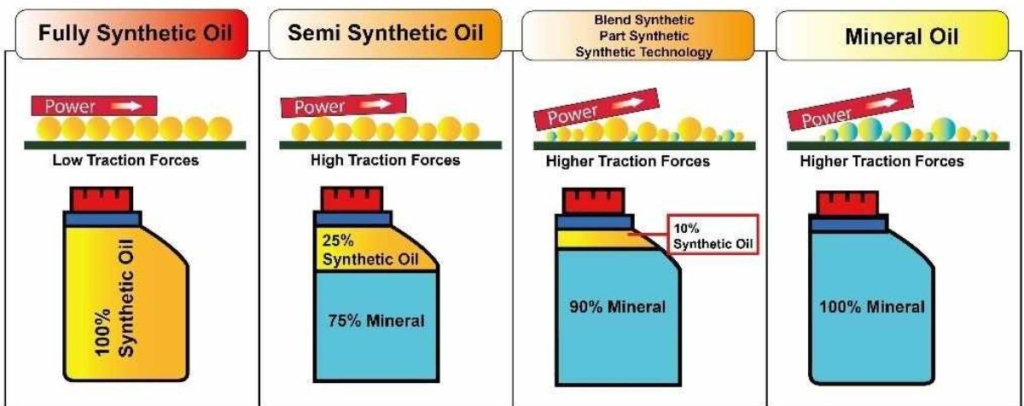
Mineral oils are complex mixtures, primarily containing C20–C50 hydrocarbons such as paraffins, alicyclics, olefinic species, aromatics, and polycyclic aromatic hydrocarbons (PAHs). Mineral engine oil, derived from refining crude oil, is affordable and widely available, making it suitable for older vehicle models and budget-conscious car owners. However, it contains more impurities than synthetic oils, resulting in higher traction forces and less efficient lubrication, which can cause increased wear on engine components over time.
Mineral oil requires more frequent changes than synthetic oils, which can offset its initial cost savings. Regular oil changes are essential to maintain engine performance and prevent wear, making it less convenient for those seeking low-maintenance options. Due to its higher traction forces and reduced performance, mineral oil is less suitable for high-performance engines or extreme driving conditions.
Semi-Synthetic Oil
Semi-synthetic oils, also known as “synthetic blends,” combine mineral oil and synthetic oil, providing many of the advantages of full synthetic oil at a lower cost. Typically composed of 25% synthetic oil and 75% mineral oil, this blend offers a more economical option while enhancing performance over conventional mineral oils.
The 25% synthetic component enhances lubrication and stability under extreme temperatures, improving overall engine protection. It also improves the mineral oil’s ability to withstand high temperatures and reduces oxidation and degradation. This combination ensures that semi-synthetic oil can handle high traction forces effectively, delivering balanced performance suitable for various driving conditions.
Fully Synthetic Oil
Unlike conventional mineral oils, which are refined from crude oil, fully synthetic oils are made from chemically modified petroleum components, primarily polyalphaolefins (PAOs) or esters. This chemical composition enhances oil stability, reduces impurities, and ensures consistent performance across various temperatures. Fully synthetic oils resist oxidation, thermal breakdown, and sludge formation, better than mineral oil and semi-synthetic oil, making them ideal for high-performance engines.
Moreover, fully synthetic oils generate low traction forces, which reduce engine wear and improve fuel economy. They offer unmatched protection and performance, ensuring engines operate smoothly and efficiently under diverse driving conditions.
Understanding Viscosity Ratings
Viscosity is a critical property of fluids that measures the lubricant’s resistance to flow. For engine oils, viscosity directly impacts engine performance, as it affects the lubrication and cooling of engine components.
To measure viscosity, the Society of Automotive Engineers (SAE) has implemented a system for classifying engine oil viscosity.
What is the SAE rating?
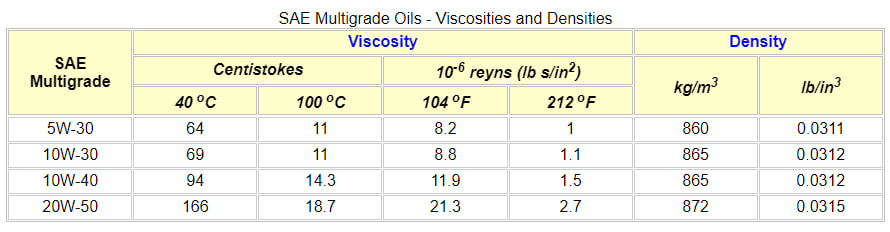
Image Source: https://www.engineeringtoolbox.com/sae-grade-oil-d_1208.html
The SAE viscosity grading system for engine oils is a standardized method for classifying engine oil viscosity characteristics. The system consists of numbers and letters that indicate the oil’s viscosity at different temperatures.
As such, engine oil ratings are typically expressed as a two-number sequence, such as 5W-30 or 10W-40. The first number stands for the oil’s viscosity at low temperatures (Winter or “W” rating), and the second number represents its viscosity at high temperatures.
Below are the SAE viscosity grades:
- Single-Grade Oils: These have a single viscosity number, indicating their performance within a specific temperature range.
- Example: SAE 30, SAE 40, and SAE 50.
- Multi-Grade Oils: These have two viscosity numbers, separated by a “W” or “w.” The first number is the oil’s viscosity at low temperatures, and the second one is its viscosity at high temperatures.
- Example: SAE 5W-30, SAE 10W-40, and SAE 20W-50.
What do these SAE ratings mean?
For single-grade oils, the viscosity number (e.g., 30 or 40) represents the oil’s kinematic viscosity at 100°C. The higher the number, the thicker the oil.
For multi-grade oils, however, the number before the “W” (e.g., 5W or 10W) indicates the maximum cranking viscosity at low temperatures. Lower numbers like 0W or 5W indicate better performance at very low temperatures. Higher numbers indicate thicker oil at high temperatures.
Let Fluid Solutions Help You Find the Most Optimal Engine Oil
You can make a more informed decision by understanding the different types of engine oils, SAE ratings, and oil selection factors. Consult with Fluid Solutions for expert advice and explore the product catalog to find the perfect match for your vehicle’s needs.
Fluid Solutions offers a range of engine oils designed to meet specific vehicle needs for most engine types, driving conditions, and climates. Its selection includes mineral oils, synthetic diesel and gasoline engine oils, and fully synthetic diesel and gasoline engine oils. They also provide packaged solutions for your fleet. Check out their product page for the full list of available oils and their respective SAE ratings.
Contact Fluid Solutions, and we’ll help you select the correct engine oil for your vehicle. To learn more, call (02) 8370 5928 / (0917) 894 9156 or email [email protected].
Social Media Links:
Facebook Page: https://www.facebook.com/fluidsolutionsinc
LinkedIn: https://www.linkedin.com/company/fluid-solutions-inc