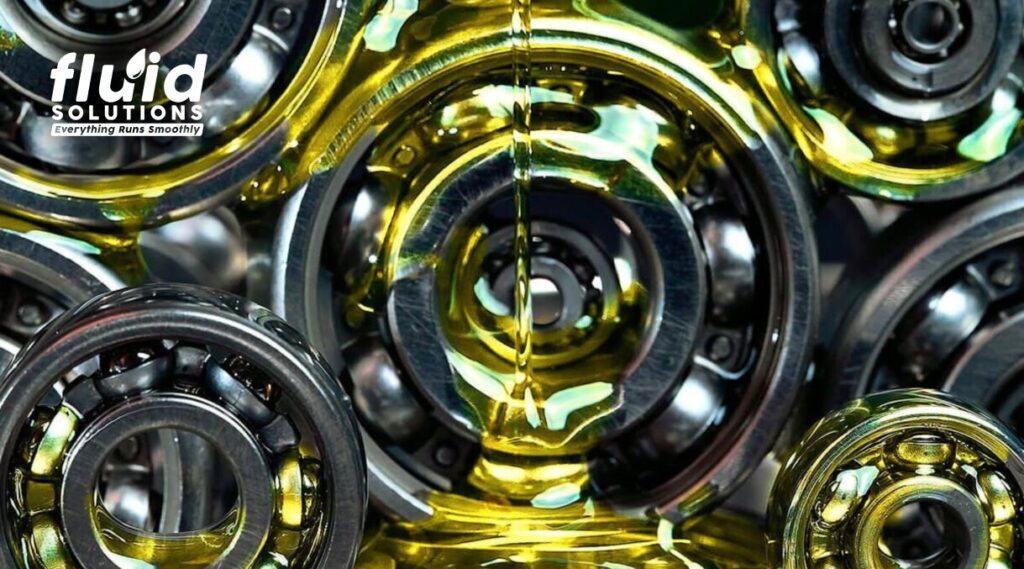
Bearings are mechanical components that support rotating or moving parts while reducing friction and carrying loads. To operate reliably, they require proper lubrication.
Bearing oils are industrial lubricants specifically formulated for circulating and oil-lubricated bearing systems. They provide a protective lubricating film that reduces direct metal-to-metal contact, helping bearings operate smoothly under varying speeds, loads, and temperatures.
Unlike greases, which remain in place using a thickener, bearing oils continuously circulate through the system to lubricate bearings, dissipate heat, and carry away contaminants. This makes bearing oils a suitable lubricant type for bearings used in high-speed or continuously operating equipment across manufacturing, power generation, and other industrial applications.
Key Functions of Bearing Oils
Bearing oils perform multiple simultaneous roles within industrial systems, directly influencing bearing reliability.
- Maintain a Stable Lubricating Film: Bearing oils maintain a continuous oil film between rolling elements and raceways to prevent direct surface contact. A stable film is essential for reducing rolling and sliding friction while minimizing wear under varying speeds and loads.
- Heat Dissipation: Unlike grease, bearing oils can continuously circulate through the bearing housing to absorb and carry away heat. This helps control bearing operating temperatures in high-speed and continuously running equipment.
- Flush Away Contaminants: In circulating lubrication systems, bearing oils transport wear particles, dirt, and moisture away from the bearing toward filters or reservoirs. Continuous contaminant removal helps reduce abrasive wear and maintain cleaner bearing surfaces.
- Protect Bearing Surfaces During Operation and Idle Periods: Bearing oils leave a protective film on metal surfaces that helps resist rust and corrosion caused by moisture, condensation, or process contaminants. This protection is especially important for equipment that operates intermittently or remains idle for extended periods.
- Ensure Consistent Lubrication in Circulating Systems: Industrial bearing oil is designed to flow efficiently through lubrication lines, bearings, filters, and reservoirs while maintaining its viscosity during operation. Consistent oil circulation ensures that bearings receive a continuous supply of clean lubricant throughout the system.
Key Properties of Bearing Oils
The performance of a bearing oil depends on several physical and chemical properties that determine its ability to lubricate, protect, and operate reliably under different service conditions.
| Properties | Importance in Bearing Applications |
| Viscosity | Determines the oil film thickness that keeps bearing surfaces separated. Common bearing oils are available in ISO VG 32, 46, 68, 100, 150, 220, and 320, with the appropriate grade selected according to bearing speed, load, and operating temperature. Using the correct viscosity helps reduce wear, operating temperature, and energy consumption. |
| Oxidation Stability | Slows oil degradation caused by prolonged exposure to heat and oxygen, helping extend oil service life while reducing sludge and varnish deposits that can restrict oil flow. |
| Thermal Stability | Maintains consistent lubrication at elevated operating temperatures, reducing the risk of lubricant breakdown during continuous operation. |
| Rust and Corrosion Protection | Protects bearings from rust caused by moisture and condensation, helping prevent premature bearing failure during operation or equipment shutdown. |
| Water Separability (Demulsibility) | Allows water to separate from the lubricant for easier removal, helping preserve lubrication performance and reduce corrosion inside the bearing system. |
| Air Release & Low Foaming | Reduces air bubbles and foam that can interrupt oil circulation, ensuring a continuous lubricating film and more effective heat removal. |
| Filterability | Allows the oil to pass through filtration systems without losing performance, helping keep the lubricant clean and extending both oil and bearing service life. |
Base Oil Types
Bearing oils are formulated using different base oil technologies, each suited to specific operating conditions, equipment requirements, and maintenance intervals.
| Base Oil Type | Typical Bearing Applications | Key Characteristics |
| Mineral Oil | General industrial machinery, electric motors, pumps, fans, conveyors, and other equipment operating under normal conditions | Cost-effective and suitable for most industrial bearing applications with moderate speeds and temperatures. |
| Polyalphaolefin (PAO) | High-speed bearings, low-temperature environments, electric motors, and equipment requiring extended oil service intervals | Excellent oxidation stability, wide operating temperature range, and long lubricant service life. |
| Ester-Based Oil | High-temperature bearings, oven conveyors, textile machinery, and other equipment exposed to elevated operating temperatures | Outstanding thermal stability, excellent lubricity, and good deposit control for demanding operating conditions. |
| Polyalkylene Glycol (PAG) | High-speed bearings, extreme-temperature applications, and specialized industrial equipment where low friction or high thermal stability is required | Naturally high viscosity index, excellent thermal stability, and low traction properties that help improve energy efficiency in suitable applications. |
Not all bearing oils are suitable for every application. Factors such as operating speed, load, temperature, lubrication method, and equipment design all influence lubricant selection. Continue reading our guide, What to Consider When Selecting Bearing Oil, to learn the key factors for selecting the appropriate bearing oil for your equipment.
Let Our Lubrication Consultants Assist You
Selecting the right bearing oil goes beyond choosing a viscosity grade. Bearing type, operating speed, load, temperature, lubrication method, and environmental conditions all influence lubricant performance and service life. Using the wrong oil can lead to increased wear, higher operating temperatures, and unnecessary maintenance costs. If you’re unsure which industrial bearing oil best suits your equipment, our lubrication consultants can help you identify a lubricant that matches your operating requirements.
For trusted industrial bearing oils in the Philippines, contact us today:
- Telephone: (+63) 2 8370 5928
- Mobile: (+63) 917 894 9156
- Email: [email protected]
Stay updated on our latest products and technical insights: